JBRA Assist. Reprod. 2026 2026;00(0):00-00
REVIEW
doi: 10.5935/1518-0557.20260063
A Comprehensive Review of Strategies to Enhance Quality and Safety in Infertility Laboratories
1KIMS Fertility Centre, Krishna Institute of Medical Sciences, Secunderabad, India-500003
CONFLICT OF INTEREST
The author declares no conflict of interest regarding the research described in this article and the preparation of the manuscript.
ABSTRACT
Assisted reproductive technology (ART) laboratories are complex environments in which human gametes and embryos are handled through highly sensitive procedures. Because of procedural complexity, manual documentation, high workload and the need for precise identification at ev-ery step, these laboratories are inherently vulnerable to er-rors that may compromise patient safety, clinical outcomes and confidence in ART. Potential hazards may arise from equipment malfunction, human error, environmental insta-bility or deviation from validated procedures. Therefore, a comprehensive framework for risk assessment, risk man-agement and safety monitoring is essential. This review dis-cusses the main risk factors in ART laboratories and exam-ines established mitigation strategies, including witnessing systems, process mapping, key performance indicators and quality management systems. It also summarizes recom-mended procedures and case-based evidence for improving laboratory safety and performance. Current evidence indi-cates that proactive risk assessment, electronic witnessing, emerging artificial intelligence tools and strict adherence to international guidelines can reduce the likelihood of errors and support high-quality, safe patient care.
Keywords: assisted reproductive technology laboratories, IVF, risk assessment, risk management, quality, safety
INTRODUCTION
The field of reproductive medicine reached a major milestone in 1978 with the birth of the first baby conceived through in vitro fertilization (IVF), offering renewed hope to couples affected by infertility (Steptoe & Edwards, 1978). Assisted reproductive technology (ART) laboratories have since become central to fertility care. They have evolved from relatively simple facilities into highly specialized laboratories designed to optimize embryo development, gamete and embryo storage, and environmental control, thereby improving ART outcomes (Sharma et al., 2018; Mortimer et al., 2018). Maintaining rigorous quality and safety standards in these laboratories is essential to improve patient outcomes and reduce risks such as contamination, patient identification errors and technique-related failures.
The implementation of a comprehensive quality management programme is essential for the successful operation of ART laboratories, from the management of raw materials and equipment to ART procedures and staff performance (Intra et al., 2016). Over the years, professional organizations and expert groups have issued guidelines and recommendations, while accreditation bodies have established standards of practice to improve, elevate and standardize laboratory and clinical procedures (ESHRE et al., 2023). However, the impact of these initiatives may be limited by confounding factors, including local protocol preferences, financial constraints, competing business interests and inadequate oversight. These factors can affect laboratory and clinical outcomes and, ultimately, the quality and consistency of patient care (Alikani & Campbell, 2025). This review analyses current strategies to improve quality and safety in ART laboratories and to support continuous improvement in infertility treatment, with emphasis on patient safety and optimal outcomes.
Nonconformances/errors in ART laboratories
In medicine, errors are not uncommon and may occasionally have serious consequences for patients. Errors in ART laboratories can occur at any stage of the laboratory cycle; however, they rarely result in mortality. In recent years, the growing demand for ART/IVF services has led to the rapid expansion of fertility clinics worldwide. Laboratory errors have become more frequent because of increased workload among embryologists, insufficiently trained staff and inadequate implementation of standard operating procedures and training programmes (Ifenatuoha et al., 2023; Sakkas et al., 2015). These errors can significantly affect ART outcomes and the quality of patient care.Human nonconformances are the most common laboratory errors and include mislabelling or mixing of gametes and embryos, as well as inadvertent interruption of equipment operation (Nesbit et al., 2022). A legal case study of IVF incidents reported approximately 205 cases filed globally (85% in the USA, 2.9% in the UK and 12.2% in other countries) for specimen mix-up, mishandling, loss or damage of specimens and contamination in IVF laboratories. Most cases (88.2%) involved specimen mix-ups, followed by gamete or embryo loss or destruction (Figure 1). These incidents affected 307 patients and 258 reproductive specimens globally and led to 76 lawsuits (Murphy et al., 2022).
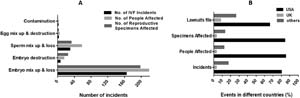
Figure 1. A. Number of incidents or errors reported in ART laboratories globally until 2021. B. Percentage of incidents, affected individuals, affected specimens and lawsuits filed in the USA, UK and other countries due to errors in ART laboratories. Data from Murphy et al. (2022).
Technical and equipment nonconformances include failures of cryopreservation systems, incubators or microscopes, all of which may interfere with gamete and embryo storage or development. For example, in 2018, failure of a cryopreservation tank at the Pacific Fertility Center in San Francisco, California, led to the loss of approximately 3,500 frozen eggs and embryos from 400 patients, resulting in federal litigation and compensation proceedings (Hawkins, 2021). In a related event, approximately 4,000 frozen eggs and embryos from 950 patients were lost at University Hospitals Cleveland Medical Center in Cleveland, USA. Deactivation of the remote alarm system connected to a cryopreservation storage tank was identified as the cause of the catastrophic event (Wamsley, 2018).Documentation and identification nonconformances include misspelled names, incorrect sample labelling and inaccurate recording of the number of oocytes or embryos (Sakkas et al., 2025). These errors can result in sample mix-ups or inaccurate patient data, particularly in the absence of double-witnessing or electronic tracking systems. In a documented incident in Singapore, a baby was born with an ethnicity inconsistent with that of the intended father because of a sperm sample mix-up at Thomson Medical Centre in 2010. Inaccurate documentation and failure to verify the sample before insemination were identified as contributing causes (Foxton, 2018).Environmental nonconformances include poor laboratory air quality and the release of volatile organic compounds from materials, which can cause embryotoxicity and impair embryo development (Morbeck, 2015). Fluctuations in temperature, pH or CO2 concentration can negatively affect embryo cleavage and development and may lead to developmental arrest. In addition, prolonged exposure to intense light can induce DNA damage in gametes and embryos (Mortimer & Mortimer, 2015a).
Variability drivers in ART laboratories
In addition to errors, the inherent heterogeneity of techniques, culture media and equipment represents a major challenge for ART laboratories seeking to maintain international standards and consistent quality.
Laboratory-specific variability
Variability in ART laboratories may arise from consumables, equipment, environmental conditions and staffing, all of which can significantly influence clinical and embryological outcomes. In many ART clinics, institutional preferences and practical considerations have a greater influence on decisions regarding embryo or gamete culture media, oil type, gas concentrations and incubation methods than robust scientific consensus. For instance, several culture media are currently available, each containing different protein sources and macromolecules. The exact concentrations of components in both single-step and sequential media are usually not disclosed by manufacturers (Sciorio & Rinaudo, 2023). In many cases, vendor preference or product availability takes precedence over rigorous comparative data. Although no single medium has been proven superior, evidence suggests that differences in media composition, protein concentration and handling procedures across laboratories can affect embryo quality, implantation rates and birth outcomes (Stimpfel et al., 2020; Youssef et al., 2015; Nelissen et al., 2012). This highlights the need for standardization and further independent studies.The widespread use of small bench-top incubators underscores the importance of oil overlay for successful embryo culture. Impurities in commercially available oils may adversely affect culture stability, including osmolality and pH, thereby influencing embryo development and viability (Mestres et al., 2022).Physical parameters such as temperature, pH and oxygen concentration are critical determinants of ART success. Embryos are commonly cultured at approximately 37°C, although temperatures between 36 and 37.5°C are also used. Studies have shown that culture at 36-36.5°C may improve cleavage and blastocyst formation rates, although reduced fertilization rates have also been observed (Fawzy et al., 2018; Hong et al., 2012). Therefore, careful temperature control is essential to minimize variability. The pH of culture media also plays a major role in embryo development and is influenced by laboratory altitude, protein supplementation, macromolecules and the specific formulation of the medium. Consequently, the pH established in each laboratory is distinct and requires careful calibration. Although embryos can tolerate a range of pH values, deviations from physiological ranges adversely affect metabolism, development and viability (Swain et al., 2016; Swain & Pool, 2009). Oxygen tension during embryo culture has also been extensively investigated. Embryo culture under low oxygen tension is associated with accelerated development and reduced disruption of gene expression, making it the preferred approach in clinical practice (Ng et al., 2018). Although most IVF laboratories are expected to maintain embryo cultures at oxygen levels below 5%, a worldwide survey reported that only 25% of laboratories used 5% oxygen tension exclusively (Christianson et al., 2014).Infrastructure-related factors, including laboratory layout, air quality and workflow design, may also contribute to variability. Construction materials such as flooring and benchtops can release particulate matter and volatile organic compounds, which may impair air quality and contaminate samples. Evidence indicates that many laboratories do not fully meet recommended requirements for construction and site selection, which may affect air cleanliness, contamination rates and, ultimately, clinical outcomes (Alikani & Campbell, 2025; Mortimer et al., 2018).Another important source of laboratory variability is understaffing, including an inadequate staff-to-cycle ratio, high workload, insufficiently trained personnel and limited access to structured training programmes. These issues contribute to inter-laboratory variability and can substantially affect ART outcomes, particularly in large laboratories with high patient volume (Shapiro et al., 2023; ESHRE Working Group on Embryologist Training Analysis et al., 2023).
Data reporting and documentation variability
The absence of clear data reporting standards and a globally accepted certification system for ART laboratories hinders international assessment and improvement of IVF outcomes. Most certification systems focus on diagnostic laboratory standards and do not fully address the operational and clinical demands of IVF laboratories. Country-specific frameworks often fail to incorporate outcomes as quality indicators. Disparities in access to care and diversity in patient populations further amplify these variations (Cairo Consensus Group & Alpha Scientists in Reproductive Medicine, 2025) (Figure 2).
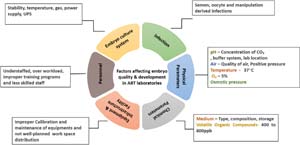
Figure 2. Factors and sources of variation affecting embryo quality and development in ART laboratories.
Comprehensive overview of laboratory, environmental and procedural factors that influence embryo quality and developmen-tal competence in ART laboratories.
Strategies for risk analysis in ART laboratories
Risk assessment is defined as a method for the early identification of adverse events or hazards, preceding a management phase that includes the identification and implementation of specific control measures for each potential hazard.Evaluating and managing risks in ART laboratories is essential to safeguard patient safety, improve outcomes and comply with quality standards. Because of the complexity and sensitivity of laboratory procedures, potential risks must be identified at each stage of the workflow, from gamete handling and monitoring of culture conditions to embryo transfer and cryostorage. These risks are evaluated by assessing their probability, severity and detectability (Kennedy & Mortimer, 2007). Risk can be evaluated either reactively or proactively. Reactive evaluation documents adverse events that have already occurred, whereas proactive assessment anticipates risks and aims to prevent adverse clinical outcomes.Reactive risk assessment focuses on identifying the underlying causes of errors or adverse events that have already occurred in order to prevent recurrence. Root cause analysis is widely used in reactive risk assessment to determine whether an event resulted from human error, equipment malfunction or other contributing factors. A limitation of this approach is that the evaluation depends on the reporter’s description of the event, which may amplify or minimize its significance. In 2005, the Human Fertilisation and Embryology Authority in the UK implemented a national reporting system to document adverse events in ART units (Agrawal et al., 2013). ART laboratories should use reactive methods to maintain high quality standards and promote accountability and safety; however, these methods should complement, rather than replace, proactive assessment (Hibbert et al., 2018; Mortimer & Mortimer, 2015b).Proactive risk assessment uses a probabilistic approach to identify potential threats and develop strategies to mitigate anticipated adverse outcomes. These methods have gained acceptance among clinicians because they support early problem recognition and prevention. By examining the entire process, proactive methods make it possible to anticipate serious adverse events and implement preventive measures before errors occur, unlike reactive tools that are applied only after an incident (Mortimer & Mortimer, 2015c). Failure modes and effects analysis (FMEA) is a quantitative tool that systematically identifies and mitigates potential failures, problems and errors within a system, design, process or service before they occur (Intra et al., 2016; Ashley et al., 2010). Based on previous experience and adverse-event records, failures can be evaluated by considering frequency, severity and detectability on a 1-to-5 scale. A risk priority number (RPN) can then be calculated by multiplying these ratings (Rezaei et al., 2018). In some settings, the Australian/New Zealand Standard AS/NZS 4360:1999 for risk management has been used, with risk scores determined by multiplying consequence by likelihood (Joint Technical CommitteeOB/7, 1999; Tomlinson, 2005). For example, the potential for incubator gas failure, which has severe consequences and may be difficult to detect promptly, could generate a high RPN. Once high-risk areas are identified, targeted actions such as modifying standard operating procedures, improving monitoring, ensuring equipment redundancy and retraining personnel can be implemented.
Risk management strategies in ART laboratories
Effective risk management in assisted conception requires a systematic process comprising four essential steps: identification, evaluation, control and monitoring. After risks have been identified and assessed, risk management plans must be implemented in accordance with accepted accreditation practices, national guidelines and regulatory requirements. This multifaceted approach should be continuous in order to ensure procedural accuracy, sample quality and patient safety. The following components are central to robust ART risk management systems.
System analysis
System analysis is an organized assessment procedure used in ART laboratories to examine how personnel, procedures, equipment and the surrounding environment interact. Its main objective is to ensure safe and high-quality reproductive care. A thorough understanding of the system requires detailed knowledge of all laboratory processes (Mortimer & Mortimer, 2015d).
Process mapping and control
Process mapping is one of the most important tools in system analysis. This quality management method visually records the steps that constitute a specific operation, highlighting strengths, weaknesses and quality-control points. The information is then used to improve the efficiency and effectiveness of the process. A process map has at least one starting point and one end point. Tasks may be displayed in “swim lanes” or “silos”, which identify responsibilities and locations, clarify who performs each task and show where each step occurs. Silo diagrams run from top to bottom, whereas swim lanes are horizontal bands that show points of interaction or transfer between individuals. These interaction points often represent areas with a high risk of error or variation (Parker, 2004). Figure 3 illustrates a process map for embryo cryopreservation.
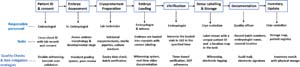
Figure 3. Process map of embryo cryopreservation using vitrification, illustrating the sequential workflow, responsible personnel and quality-assurance steps.
Key performance indicators and benchmarks
Key performance indicators (KPIs) and benchmarks form the foundation of quality management in ART laboratories. Benchmarking in IVF laboratories is a structured approach that involves evaluating and comparing KPIs with recognized national or international standards to improve clinical and laboratory outcomes. This practice is essential for identifying deviations from optimal performance, implementing corrective measures and promoting continuous quality improvement (Hreinsson, 2019). KPIs can be classified into three categories: structure-related KPIs, process-related KPIs and outcome-related KPIs.Structure-related KPIs quantify the quality of the treatment setting, including facilities, equipment, financial resources and human resources (Fabozzi et al., 2020).For example, more than 90% of staff should have formal training in embryology or reproductive science, and ART laboratories should maintain an adequate staff-to-procedure ratio, typically two embryologists for every 150 IVF cycles performed annually (Latif Khan et al., 2023).Process-related KPIs evaluate laboratory operational performance, focusing on efficiency, timeliness and safety (Mant, 2001). According to the 2017 ESHRE consensus for high-volume clinics, the fertilization rate is a key indicator of laboratory efficiency because it reflects gamete handling and culture practices. For conventional IVF, the competence value for fertilization rate is 60% and the benchmark value is 75%. The rate of failed fertilization in stimulated cycles, defined as cycles with no oocytes showing two pronuclei, should remain below 5%. For ICSI, the fertilization rate, defined as the proportion of injected oocytes showing two pronuclei and two polar bodies 16-18 hours after injection, has a competence value of 65% and a benchmark value of 80%. Thawed or warmed oocytes and in vitro matured oocytes are excluded. The ICSI damage rate, defined as the proportion of oocytes damaged during injection or degenerated by the time of fertilization assessment, has a competence value of 10% and a benchmark value of 5% (ESHRE Special Interest Group of Embryology and Alpha Scientists in Reproductive Medicine, 2017).Outcome-related KPIs assess the effectiveness of ART laboratory performance. They are often used to evaluate experts and facilities; however, because they are influenced by several confounding variables, their interpretation may be limited. Therefore, when outcome KPIs are used, data collection must be standardized and results should be adjusted for confounding factors, including differences in patient populations. For example, clinical pregnancy rates may range from 10% to 30%, while benchmark values may range from 20% to 40%, depending on patient age and embryo quality. Similarly, the implantation rate for cleavage-stage embryos has a competence value of ≥25% and a benchmark value of ≥35%. For blastocyst-stage embryos, the competence value is ≥35% and the benchmark value is ≥60% (Latif Khan et al., 2023; ESHRE Special Interest Group of Embryology and Alpha Scientists in Reproductive Medicine, 2017). Table 1 lists selected KPIs and their competence and benchmark values.
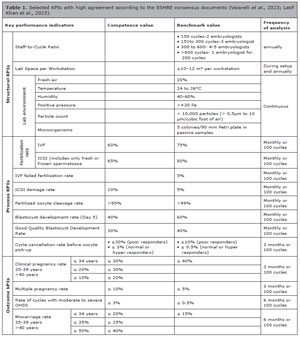
Table 1. Selected KPIs with high agreement according to the ESHRE consensus documents (Vaiarelli et al., 2023; LatifKhan et al., 2023).
Control charts can be used to evaluate KPIs regularly. The Shewhart or Levey-Jennings quality-control chart is commonly used. A control chart should display the six-month control mean and +/-2 or +/-3 SD warning limits. Theoretically, an indicator should fluctuate between the lower and upper control limits in response to physiological variation caused by differences in patient characteristics. If the indicator crosses the lower warning limit and the lower control limit, immediate action is required. If the indicator reaches the lower warning level, prompt investigation is needed to identify the problem and implement a solution.If the indicator remains below the warning limit for three consecutive assessments without crossing the control limit, this suggests a potential problem that requires corrective action (Fabozzi et al., 2020) (Figure 4).
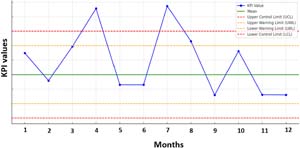
Figure 4. Control chart showing upper and lower warning and control limits.
Manual and electronic witnessing
A sample mix-up is considered a black swan event in the ART laboratory and has major consequences for both clinicians and patients (Rasouli et al., 2021). Double witnessing is recognized as best practice for preventing mix-ups in ART laboratories (de los Santos & Ruiz, 2013). In manual witnessing, a second person, usually an embryologist, verifies patient information, sample identity and procedure details before any critical action is performed. This verification process, often documented by handwritten signatures, is designed to reduce errors in sample management and patient identification and thereby lower the risk of harmful mix-ups during ART procedures (Holmes et al., 2021). Effective human witnessing requires structured protocols that emphasize verbal confirmation, consistent documentation and supervision at critical steps. Skilled personnel are required for witnessing tasks, and staff shifts should be organized according to ART procedures to improve concentration and reduce fatigue (Alteri et al., 2025).In recent years, electronic witnessing systems (EWS) have increasingly replaced manual witnessing in ART laboratories to prevent sample mismatches. EWS allow efficient tracking of gamete and embryo movement and storage within the laboratory. Studies have shown that implementation of EWS improves workflow and reduces mismatch rates (Forbrig et al., 2025; Holmes et al., 2021). Several electronic witnessing systems are currently available. RI Witness, which uses radiofrequency identification (RFID), and Matcher, which uses barcode technology, are among the most common. RFID tags attached to patient identification cards and culture vessels allow continuous tracking of biological samples through scanners installed in work areas.RFID-based witnessing offers several advantages. First, RFID tags contain legible written information, reducing confusion during visual examination. Second, RFID tags provide an error-correction function that alerts users when samples do not match, preventing process errors. Third, the EWS automatically displays patient identity information and does not advance to the next operational module when the preceding step is incomplete, thereby strengthening laboratory safety (Jiang et al., 2024; Di Berardino et al., 2022). Very low mismatch rates, ranging from 0.05% to 0.46% per witnessing point, have been reported with EWS (Sterckx et al., 2023; Rienzi et al., 2015). Thus, EWS can effectively prevent sample mix-up, although it remains uncertain whether the same errors would have been detected during manual checks. Nevertheless, any operator interaction with an EWS remains a potential source of error and should be minimized as far as possible.
Quality management system
Quality management integrates quality control, quality assurance and quality improvement into a coherent management philosophy. This framework includes organizational structure, established procedures, personnel qualifications, infrastructure and quality metrics required to meet defined standards and patient expectations. Quality management is fundamental to accreditation frameworks and lies at the core of ISO 9001:2000. Building on this standard, ISO 15189:2003 specifies requirements for quality and competence in medical laboratories, including operational requirements relevant to ART laboratories (Olofsson et al., 2013; Warnes & Norman, 2007). The quality management system ensures that every stage, from ovulation induction to embryo transfer, is performed according to validated standard operating procedures supported by training, risk management and resource allocation. ASRM and ESHRE guidelines increasingly encourage fertility centres to implement quality management systems in accordance with international standards and local legislation, recognizing that successful outcomes depend not only on technical competence but also on leadership, transparency and a commitment to continuous improvement.
Future prospects: artificial intelligence in ART laboratories
Artificial intelligence (AI) has had a major impact on medicine and has demonstrated potential to transform treatment planning, diagnosis and patient care. Through advanced pattern recognition and data processing, AI is also reshaping ART. Emerging AI technologies, including neural networks and deep learning, can analyse large datasets, identify subtle differences in embryonic development and support real-time decisions that may influence embryo implantation and pregnancy outcomes (Hew et al., 2024; Jiang & Bormann, 2023). Using time-lapse microscopy and deep learning models, AI has been used to predict embryo viability by analysing morphological characteristics, to facilitate sperm selection by identifying highly motile and morphologically normal sperm cells and to assess oocytes (Hanassab et al., 2024).Despite its broad implementation in other areas, the use of AI in ART laboratories still presents significant challenges. One major concern is insufficient clinical validation using large and diverse datasets. Most AI systems have been developed and evaluated using restricted datasets that do not fully capture patient variability and are often tested under controlled conditions, limiting their applicability in real-world settings (Chow et al., 2021). A second concern is patient-related bias. When algorithms are trained on historical data from relatively homogeneous populations, bias may be introduced and may contribute to disparities in treatment outcomes. For example, many AI models have been developed using data predominantly from Western populations, which may not adequately represent reproductive health characteristics across different races, age groups and socioeconomic contexts (Olawade et al., 2025). Data privacy and security are also important concerns because AI systems require access to large datasets that may include sensitive personal and genetic information, raising ethical issues regarding data breaches or misuse (Afnan et al., 2021). In addition, transparency is a major ethical challenge. Many AI algorithms function as black boxes, making it difficult for clinicians and patients to understand how decisions are made. Lack of transparency may hinder effective clinical implementation (GhoshRoy et al., 2023). Although AI may be useful for workflow management and automation, regulatory bodies have not yet fully addressed its use in ART laboratories.
CONCLUSION
The primary objective of ART laboratories is to provide effective treatment, achieve successful outcomes and ensure the safety and security of stored gametes and embryos. Laboratories must therefore identify potential nonconformances and sources of variability related to equipment, protocols, the environment and human error, enabling the implementation of preventive and corrective measures that protect patient outcomes and preserve laboratory integrity. Structured approaches such as FMEA, incident reporting and regular audits are essential for cultivating a proactive safety culture. Integrating risk management into daily operations reduces errors and improves consistency, while also strengthening patient trust and supporting compliance with regulatory standards in ART practice.
Agrawal R, Burt E, Homburg R. Time-Line in HFEA Developments and Regulatory Challenges: 20 Years of Overseeing Fertility Practices and Research in the UK. J Obstet Gynaecol India. 2013;63:363-9. PMID: 24431680. DOI: 10.1007/s13224-013-0494-z
Medline
Alikani M, Campbell A. Shaping the future of the IVF laboratory: standardization for more predictable outcomes. Reprod Biomed Online. 2025;50:104854. PMID: 40287200 DOI: 10.1016/j.rbmo.2025.104854
Medline
Alteri A, Borghi L, Fava S, Canosa S, Casciani V, Dal Canto M, Scarica C, Tesoriere G, Zacà C, Cimadomo D, Vegni E, Pisaturo V. Expert-based recommendations for human witnessing in assisted reproductive technology: an Italian perspective. Reprod Biomed Online. 2025;51:104981. PMID: 40617159 DOI: 10.1016/j.rbmo.2025.104981
Medline
Ashley L, Armitage G, Neary M, Hollingsworth G. A practical guide to failure mode and effects analysis in health care: making the most of the team and its meetings. Jt Comm J Qual Patient Saf. 2010;36:351-8. PMID: 20860241 DOI: 10.1016/s1553-7250(10)36053-3
Medline
Cairo Consensus Group 2023, Alpha Scientists In Reproductive Medicine. Cairo Consensus on Accreditation as the Basis for Future-Proofing the ART Laboratory. Reprod Biomed Online. 2025;50:104106. PMID: 39242260 DOI: 10.1016/j.rbmo.2024.104106
Medline
Chow DJX, Wijesinghe P, Dholakia K, Dunning KR. Does artificial intelligence have a role in the IVF clinic? Reprod Fertil. 2021;2:C29-C34. PMID: 35118395. DOI: 10.1530/RAF-21-0043.
Medline
Christianson MS, Zhao Y, Shoham G, Granot I, Safran A, Khafagy A, Leong M, Shoham Z. Embryo catheter loading and embryo culture techniques: results of a worldwide Web-based survey. J Assist Reprod Genet. 2014;31:1029-36. PMID: 24913025 DOI: 10.1007/s10815-014-0250-z
Medline
de los Santos MJ, Ruiz A. Protocols for tracking and witnessing samples and patients in assisted reproductive technology. Fertil Steril. 2013;100:1499-502. PMID: 24427790 DOI: 10.1016/j.fertnstert.2013.09.029
Medline
European IVF Monitoring Consortium (EIM) for the European Society of Human Reproduction and Embryology (ESHRE); Smeenk J, Wyns C, De Geyter C, Kupka M, Bergh C, Cuevas Saiz I, De Neubourg D, Rezabek K, Tandler-Schneider A, Rugescu I, Goossens V. ART in Europe, 2019: results generated from European registries by ESHRE. Hum Reprod. 2023;38:2321-38. PMID: 37847771 DOI: 10.1093/humrep/dead197
Medline
ESHRE Special Interest Group of Embryology and Alpha Scientists in Reproductive Medicine. Electronic address: coticchio.biogenesi@grupposandonato.it The Vienna consensus: report of an expert meeting on the development of ART laboratory performance indicators. Reprod Biomed Online. 2017;35:494-510. PMID: 28784335 DOI: 10.1016/j.rbmo.2017.06.015
Medline
ESHRE Working Group on Embryologist Training Analysis; Scarica C, Woodward BJ, De Santis L, Kovačič B. Training and competency assessment of Clinical Embryologists and licensing of the profession in European countries. Hum Reprod Open. 2023;2023:hoad001. PMID: 36789007 DOI: 10.1093/hropen/hoad001
Medline
Fabozzi G, Cimadomo D, Maggiulli R, Vaiarelli A, Ubaldi FM, Rienzi L. Which key performance indicators are most effective in evaluating and managing an in vitro fertilization laboratory? Fertil Steril. 2020;114:9-15. PMID: 32532495 DOI: 10.1016/j.fertnstert.2020.04.054
Medline
Fawzy M, Emad M, Gad MA, Sabry M, Kasem H, Mahmoud M, Bedaiwy MA. Comparing 36.5°C with 37°C for human embryo culture: a prospective randomized controlled trial. Reprod Biomed Online. 2018;36:620-6. PMID: 29625822 DOI: 10.1016/j.rbmo.2018.03.011
Medline
Forbrig M, Peirce K, Copeland C, Natalwala J, Chapple V, Liu Y. Risk factors for mismatches in the ART laboratory: an analysis of 73,719 electronic witnessing points. Reprod Biomed Online. 2025;50:104500. PMID: 40106886 DOI: 10.1016/j.rbmo.2024.104500
Medline
GhoshRoy D, Alvi PA, Santosh KC. AI Tools for Assessing Human Fertility Using Risk Factors: A State-of-the-Art Review. J Med Syst. 2023;47:91. PMID: 37610455 DOI: 10.1007/s10916-023-01983-8
Medline
Hanassab S, Abbara A, Yeung AC, Voliotis M, Tsaneva-Atanasova K, Kelsey TW, Trew GH, Nelson SM, Heinis T, Dhillo WS. The prospect of artificial intelligence to personalize assisted reproductive technology. NPJ Digit Med. 2024;7:55. PMID: 38429464 DOI: 10.1038/s41746-024-01006-x
Medline
Hew Y, Kutuk D, Duzcu T, Ergun Y, Basar M. Artificial Intelligence in IVF Laboratories: Elevating Outcomes Through Precision and Efficiency. Biology (Basel). 2024;13:988. PMID: 39765654 DOI: 10.3390/biology13120988
Medline
Hibbert PD, Thomas MJW, Deakin A, Runciman WB, Braithwaite J, Lomax S, Prescott J, Gorrie G, Szczygielski A, Surwald T, Fraser C. Are root cause analyses recommendations effective and sustainable? An observational study. Int J Qual Health Care. 2018;30:124-31. PMID: 29346587 DOI: 10.1093/intqhc/mzx181
Medline
Holmes R, Wirka KA, Catherino AB, Hayward B, Swain JE. Comparison of electronic versus manual witnessing of procedures within the in vitro fertilization laboratory: impact on timing and efficiency. F S Rep. 2021;2:181-8. PMID: 34278352 DOI: 10.1016/j.xfre.2021.04.006
Medline
Intra G, Alteri A, Corti L, Rabellotti E, Papaleo E, Restelli L, Biondo S, Garancini MP, Candiani M, Viganò P. Application of failure mode and effect analysis in an assisted reproduction technology laboratory. Reprod Biomed Online. 2016;33:132-9. PMID: 27282213. DOI: 10.1016/j.rbmo.2016.05.008.
Medline
Jiang MX, Guo L, Li S, Xiao XF, Chen W, Chen SQ, Chen NQ, Sun YY, Zhang GL, Zeng XH, Xiao YM, Fan LH. IVF laboratory management through workflow-based RFID tag witnessing and real-time information entry. Reprod Biol Endocrinol. 2024;22:96. PMID: 39097723. DOI: 10.1186/s12958-024-01267-x.
Medline
Jiang VS, Bormann CL. Artificial intelligence in the in vitro fertilization laboratory: a review of advancements over the last decade. Fertil Steril. 2023;120:17-23. PMID: 37211062. DOI: 10.1016/j.fertnstert.2023.05.149
Medline
Kennedy CR, Mortimer D. Risk management in IVF. Best Pract Res Clin Obstet Gynaecol. 2007;21:691-712. PMID: 17499552 DOI: 10.1016/j.bpobgyn.2007.02.009
Medline
Mant J. Process versus outcome indicators in the assessment of quality of health care. Int J Qual Health Care. 2001;13:475-80. PMID: 11769750 DOI: 10.1093/intqhc/13.6.475
Medline
Mestres E, Matia-Algué Q, Villamar A, Casals A, Acacio M, García-Jiménez M, Martínez-Casado A, Castelló C, Calderón G, Costa-Borges N. Characterization and comparison of commercial oils used for human embryo culture. Hum Reprod. 2022;37:212-25. PMID: 34791223 DOI: 10.1093/humrep/deab245
Medline
Morbeck DE. Air quality in the assisted reproduction laboratory: a mini-review. J Assist Reprod Genet. 2015;32:1019-24. PMID: 26238385 DOI: 10.1007/s10815-015-0535-x
Medline
Mortimer D, Cohen J, Mortimer ST, Fawzy M, McCulloh DH, Morbeck DE, Pollet-Villard X, Mansour RT, Brison DR, Doshi A, Harper JC, Swain JE, Gilligan AV. Cairo consensus on the IVF laboratory environment and air quality: report of an expert meeting. Reprod Biomed Online. 2018;36:658-674. PMID: 29656830. DOI: 10.1016/j.rbmo.2018.02.005.
Medline
Nelissen EC, Van Montfoort AP, Coonen E, Derhaag JG, Geraedts JP, Smits LJ, Land JA, Evers JL, Dumoulin JC. Further evidence that culture media affect perinatal outcome: findings after transfer of fresh and cryopreserved embryos. Hum Reprod. 2012;27:1966-76. PMID: 22552689 DOI: 10.1093/humrep/des145
Medline
Nesbit C, Blanchette Porter M, Esfandiari N. Catastrophic Human Error in Assisted Reproductive Technologies: A Systematic Review. J Patient Saf. 2022;18:e267-74. PMID: 33208638 DOI: 10.1097/PTS.0000000000000763
Medline
Ng KYB, Mingels R, Morgan H, Macklon N, Cheong Y. In vivo oxygen, temperature and pH dynamics in the female reproductive tract and their importance in human conception: a systematic review. Hum Reprod Update. 2018;24:15-34. PMID: 29077897 DOI: 10.1093/humupd/dmx028
Medline
Olawade DB, Teke J, Adeleye KK, Weerasinghe K, Maidoki M, Clement David-Olawade A. Artificial intelligence in in-vitro fertilization (IVF): A new era of precision and personalization in fertility treatments. J Gynecol Obstet Hum Reprod. 2025;54:102903. PMID: 39733809 DOI: 10.1016/j.jogoh.2024.102903
Medline
Olofsson JI, Banker MR, Sjoblom LP. Quality management systems for your in vitro fertilization clinic’s laboratory: Why bother? J Hum Reprod Sci. 2013;6:3-8. PMID: 23869142 DOI: 10.4103/0974-1208.112368
Medline
Rasouli MA, Moutos CP, Phelps JY. Liability for embryo mix-ups in fertility practices in the USA. J Assist Reprod Genet. 2021;38:1101-7. PMID: 33598752 DOI: 10.1007/s10815-021-02108-1
Medline
Rezaei F, Yarmohammadian MH, Haghshenas A, Fallah A, Ferdosi M. Revised Risk Priority Number in Failure Mode and Effects Analysis Model from the Perspective of Healthcare System. Int J Prev Med. 2018;9:7. PMID: 29441184 DOI: 10.4103/2008-7802.224046
Medline
Rienzi L, Bariani F, Dalla Zorza M, Romano S, Scarica C, Maggiulli R, Nanni Costa A, Ubaldi FM. Failure mode and effects analysis of witnessing protocols for ensuring traceability during IVF. Reprod Biomed Online. 2015;31:516-22. PMID: 26292780 DOI: 10.1016/j.rbmo.2015.06.018
Medline
Sakkas D, Pool TB, Barrett CB. Analyzing IVF laboratory error rates: highlight or hide? Reprod Biomed Online. 2015;31:447-8. PMID: 26433559 DOI: 10.1016/j.rbmo.2015.08.006
Medline
Sciorio R, Rinaudo P. Culture conditions in the IVF laboratory: state of the ART and possible new directions. J Assist Reprod Genet. 2023;40:2591-607. PMID: 37725178 DOI: 10.1007/s10815-023-02934-5
Medline
Shapiro H, Brown TJ, Chronis-Brown P, Hamilton GS, Bentley DC, Kandel R, Gotlieb AI. Education of the clinical embryology laboratory professional: development of a novel program delivered in a laboratory medicine department. F S Rep. 2023;4:262-9. PMID: 37719097 DOI: 10.1016/j.xfre.2023.03.001
Medline
Sharma RS, Saxena R, Singh R. Infertility & assisted reproduction: A historical & modern scientific perspective. Indian J Med Res. 2018;148:S10-4. PMID: 30964077 DOI: 10.4103/ijmr.IJMR_636_18
Medline
Steptoe PC, Edwards RG. Birth after the reimplantation of a human embryo. Lancet. 1978;2:366. PMID: 79723 DOI: 10.1016/s0140-6736(78)92957-4
Medline
Sterckx J, Wouters K, Mateizel I, Segers I, De Vos A, Van Landuyt L, Van de Velde H, Tournaye H, De Munck N. Electronic witnessing in the medically assisted reproduction laboratory: insights and considerations after 10 years of use. Hum Reprod. 2023;38:1529-37. PMID: 37295967 DOI: 10.1093/humrep/dead115
Medline
Stimpfel M, Bacer-Kermavner L, Jancar N, Vrtacnik-Bokal E. The influence of the type of embryo culture media on the outcome of IVF/ICSI cycles. Taiwan J Obstet Gynecol. 2020;59:848-54. PMID: 33218400 DOI: 10.1016/j.tjog.2020.08.001
Medline
Swain JE, Carrell D, Cobo A, Meseguer M, Rubio C, Smith GD. Optimizing the culture environment and embryo manipulation to help maintain embryo developmental potential. Fertil Steril. 2016;105:571-87. PMID: 26851765 DOI: 10.1016/j.fertnstert.2016.01.035
Medline
Swain JE, Pool TB. New pH-buffering system for media utilized during gamete and embryo manipulations for assisted reproduction. Reprod Biomed Online. 2009;18:799-810. PMID: 19490784 DOI: 10.1016/s1472-6483(10)60029-6
Medline
Tomlinson M. Managing risk associated with cryopreservation. Hum Reprod. 2005;20:1751-6. PMID: 15905299 DOI: 10.1093/humrep/deh679
Medline
Vaiarelli A, Zacà C, Spadoni V, Cimadomo D, Conforti A, Alviggi C, Palermo R, Bulletti C, De Santis L, Pisaturo V, Vigiliano V, Scaravelli G, Ubaldi FM, Borini A. Clinical and laboratory key performance indicators in IVF: A consensus between the Italian Society of Fertility and Sterility and Reproductive Medicine (SIFES-MR) and the Italian Society of Embryology, Reproduction and Research (SIERR). J Assist Reprod Genet. 2023;40:1479-94. PMID: 37093443 DOI: 10.1007/s10815-023-02792-1
Medline
Warnes GM, Norman RJ. Quality management systems in ART: are they really needed? An Australian clinic’s experience. Best Pract Res Clin Obstet Gynaecol. 2007;21:41-55. PMID: 17085076. DOI: 10.1016/j.bpobgyn.2006.09.005
Medline
Youssef MM, Mantikou E, van Wely M, Van der Veen F, Al-Inany HG, Repping S, Mastenbroek S. Culture media for human pre-implantation embryos in assisted reproductive technology cycles. Cochrane Database Syst Rev. 2015;2015:CD007876. PMID: 26585317 DOI: 10.1002/14651858.CD007876.pub2
Medline