JBRA Assist. Reprod 2006;10(4):9-16
ARTIGO ORIGINAL
doi: 10.5935/1518-0557.2006.10.4.02
The use of Recombinant Luteinizing Hormone in Addition to Recombinant Follicle-stimulating Hormone in Ovarian Stimulation with the GnRH-antagonist Protocol
O Emprego de Hormônio Luteinizante Recombinante Associado ao Hormônio Folículoestimulante Recombinante nos Protocolos de Estimulação Ovariana com Antagonista do GnRH
1Centro de Reprodução Humana Prof. Franco Junior, Ribeirão Preto, SP
2Departamento de Ginecologia e Obstetrícia, Faculdade de Medicin de Botucatu, UNESP, Botucatu, SP
3Faculdade de Medicina da Universidade de Santo Amaro, São Paulo, SP
ABSTRACT
The purpose of this investigation was to verify the efficacy of recombinant LH supplementation for controlled ovarian stimulation in GnRH-antagonist protocol for assisted reproductive technologies cycles. Search strategies included on-line surveys of databases from 1990 to 2006. In this review and meta-analysis, the observed advantages for the LH supplementation protocol were a higher serum estradiol levels on the day of hCG administration and a higher number of mature oocytes. However, there were no differences observed in the total amount of r-FSH administered, days of stimulation, number of oocyte retrieved, the clinical pregnancy rate per oocyte retrieval, the implantation rate and miscarriage rate. This result demonstrates that the association of r-LH with r-FSH may prevent any decrease in estradiol after antagonist administration and a significant higher number of mature oocytes was obtained. Nevertheless, additional randomized controlled trials are needed confirm these observations.
Key Words: ovarian stimulation, recombinant FSH, recombinant LH, GnRH antagonist
RESUMO
O objetivo deste estudo foi de verificar a eficiência da suplementação com LH recombinante no protocolo de estimulação ovariana com antagonista do GnRH e FSH recombinante, através de revisão de literatura e meta-análise. As pesquisas na literatura médica incluíram os anos de 1990 a 2006. As vantagens observadas para a suplementação com r-LH foram uma maior concentração de estradiol no dia da administração do hCG e um maior número de oócitos maduros obtidos. Entretanto, não foram observadas diferenças na quantidade total de r-FSH administrada, dias de estimulação, número de oócitos coletados, taxa de gravidez clínica por punção, taxas de implantação e de aborto. Nossa investigação sugere que a associação de r-LH com r-FSH pode prevenir a queda nos níveis de estradiol após a administração do antagonista, e que um número significantemente maior de oócitos maduros pode ser obtido. Entretanto, outros estudos prospectivos e randomizados são necessários para confirmar tais observações.
Unitermos: estimulação ovariana, FSH recombinante, LH recombinante, antagonista do GnRH.
INTRODUCTION
The pharmacology of ovarian stimulation has been strongly influenced by the two-cell two gonadotrophin theory. This way, follicular stimulation protocols historically have included both follicle-stimulating hormone (FSH) and luteinizing hormone (LH) in an attempt to mimic normal physiology (Sills et al., 1999). During recent years, the effect of LH on follicular maturation and pregnancy outcome during the course of ovarian stimulation in relation to assisted reproduction has received increasing attention. This interest reflects the fact that modern stimulation protocols have resulted in LH concentrations substantially lower than those observed in the natural cycle and in previously used protocols. The introduction of gonadotrophin-releasing hormone (GnRH) agonists in the mid-1980s successfully circumvented the problems of a premature LH surge. During the same period of time, there has been a gradual shift from human menopausal gonadotrophin (HMG) with equal amounts of FSH and LH-like activity over pure urinary derived FSH preparations to recombinant human FSH (r-FSH), without LH activity (Humaidan et al., 2004). In addition, the recent introduction of GnRH antagonists offers the opportunity to control the endogenous LH surge in a rapid and more convenient way. Indeed, GnRH antagonists act on a gonadotrophin secretion through an immediate competitive blockade of GnRH receptors and have induced a marked decrease in serum LH levels, and a less pronounced decreased in FSH secretion (Albano et al., 1997).
Some studies have suggested that the suppression of the endogenous LH secretion does not seem to affect the majority of women undergoing assisted reproduction and stimulation with recombinant FSH. However, other studies have indicated that a group of normogonadotrophic women down regulated and stimulated with pure FSH preparations may experience so low LH concentrations that parameters of the IVF treatment are compromised (Humaidan et al, 2004).
Based on the above considerations, this meta-analysis aims to compare the efficacy of recombinant LH supplementation in women undergoing assisted reproduction and stimulation with recombinant FSH for protocols of ovarian stimulation with antagonists in IVF/ICSI cycles.
MATERIALS AND METHODS
Criteria for considering studies for this metaanalysis
All published and ongoing randomized controlled trials (RCT) comparing the effect of recombinant LH supplementation in women undergoing assisted reproduction and stimulation with recombinant FSH were analyzed.
Types of outcome measures
The primary outcome measures used for this meta-analysis were the number of days of stimulation, the total amount of r-FSH administered, serum estradiol levels on the day of hCG administration, the number of retrieved and mature (MII) oocytes. The secondary outcomes were clinical pregnancy rate (CPR) per oocyte retrieval, implantation rate and miscarriage rate.
Identification of studies
Search strategies included on-line surveys of databases (ME- DLINE, EMBASE, Science Citation Index, Cochrane Controlled Trials Register and OVID) from 1990 to 2006. There was no language restriction. The following Medical Subject Headings and text words were used: “ovarian stimulation”, “recombinant FSH”, “recombinant LH”, “GnRH antagonist”, “GnRH agonist” and “randomized controlled trial”. The principal inclusion criterion was randomized controlled trial.
Validity assessment and data extraction
Each trial was assessed independently by two reviewers and ranked for its methodology rigor and its potential to introduce bias. Missing data were obtained from the authors when possible.
Statistical analysis
Data management and analysis were conducted using the StatsDirect statistical software (Cheshire, UK). Effectiveness was evaluated using the Mantel-Haenszel method. A confidence interval for the Mantel-Haenszel odds ratio in StatsDirect was calculated using the Robins, Breslow and Greenland variance formula. A chi-square test statistic was used with its associated probability that the pooled odds ratio (OR) was equal to one. The StatsDirect also gives the option to base effect size calculations on weighted mean difference (WMD) as described in the Cochrane Collaboration Handbook (Mulrow and Oxman, 1996). The measure of heterogeneity was evaluated by Cochran’s Q and the Breslow-Day test. A nonsignificant result (i.e. lack of heterogeneity) indicates that no trial has either an OR or WMD that is statistically significantly worse or better than the overall common OR or WMD obtained by pooling the data. The fixed effects model was used for OR and WMD. Since a fixed effects model has been employed here it is important to acknowledge that inferences refer only to the particular studies included in the analysis. Meta-analysis used in this way is simply a device to pool the information from the various studies to provide a composite finding, but only for those studies. In the alternative random effect model, the individual studies are regarded as a random sample from the (infinite) population of studies. Global inferences would then be permissible, but the random errors used would then need to reflect inter-study variation. Since each of our analyses contained only five studies, we decided to derive our inferences from a fixed effects model.
RESULTS
Search results
Five trials fulfilled the inclusion criteria. A multiple low-dose regimen (Cetrorelix-0.25mg) was applied in three and a fixed dose (Cetrorelix-3.0mg) regimen was applied in two.
Description of the studies included:
Acevedo et al. (2004): 42 young voluntary donors were randomly assigned with a computer-generated list to the GnRH antagonist alone protocol (n=20) or the GnRH antagonist + r-LH (n=22). The donors were healthy, age ranged from 18 to 35, and with normal menstrual cycle. Donors with polycystic ovary disease (PCO), endometriosis, hydrosalpinx and severe male factor infertility were excluded from this study. Twenty donors were subjected to a step-down protocol in which LH activity was suppressed with a GnRH antagonist. On the third or fourth day of their menstrual period, a fixed dose of 225IU/day of r-FSH (Gonal-F®, Serono, Madrid, Spain) was given for 5 days. At day 6 of ovarian stimulation, 0.25mg/day of GnRH antagonist (Cetrotide®, Serono, Spain) was subcutaneously injected until hCG was given. Twenty-two donors were subjected to the same GnRH antagonist + r-FSH step-down protocol, except when the GnRH antagonist was initiated, 75IU/day r- LH (Luveris®, Serono, Spain) was added and maintained until GnRH antagonist was discontinued.Cédrin-Durnerin et al. (2004) A total of 200 patients that were submitted to oocyte pick-up from three centers were enrolled in this study. Ovulatory women were included with the following criteria: age 19-38 years; body mass index (BMI)<30; normal ovulatory function assessed by hormonal determinations at day 3 of a spontaneous cycle. All patients with history of low (<5 oocytes) or high (>15 oocytes) ovarian response in a previous IVF/ICSI attempt were excluded from the study. Pre-treatment with an oral contraceptive pill (levonorgestrel 0.15 mg + ethynylestradiol 30µg) was given during the cycle prior to the IVF/ICSI procedure. Three days after pill discontinuation, stimulation was started by daily injection of 150-300IU of r-FSH (GonalF®, Serono SA, France). The starting dose was chosen according to patient’s age (150IU/day, age = 35 years; 225 IU/day, age > 35 years), BMI (starting dose increased by 75IU/day if BMI was 27 to 30) and ovarian responsiveness in previous cycles. This dose was maintained constant for 5 days. From day 6 of the stimulation, r-FSH doses were individually adjusted according to hormonal determinations and ultrasound data. When the follicle reached 14-16mm diameter, patients received a single injection of cetrorelix 3.0 mg (Cetrotide®, Serono SA, France) and received (n=107) or not (n=94), according to randomization, a daily injection of 75IU r-LH (Luveris®, Serono SA, France) from the time of cetrorelix injection up to hCG administration. In both groups, r-FSH dose adjustment was not allowed at the time of cetrorelix administration. If criteria for triggering ovulation were not met within 4 days after cetrorelix administration, additional injections of cetrorelix 0.25mg per day were performed until hCG administration. Randomization for r-LH supplementation was performed in Centre 1 on day 1 of the stimulation by means of serially numbered, opaque, sealed envelopes. The allocation sequence was generated by a random permutation table and was concealed from clinicians enrolling participants. In Centres 2 and 3, patients were randomized when they received their prescription according to the even on uneven year of the woman’s birth. This latter quasi-randomization procedure was applied for clinician’s convenience and explains the unequal number of patients in each group for these centers. Neither patients nor clinicians were blinded to r-LH administration. Patients were included in the study for only one cycle.Sauer et al. (2004) This was an open label, randomized, multi-centre study. In the present study, three groups of patients were compared: Group AGnRH agonist + r-FSH, Group B- GnRH antagonist + r-FSH and group CGnRH antagonist + r-FSH + r-LH. Since the association of r-LH is relevant for this meta-analysis, only (data) comparison between group B and C were considered. A total of 42 infertile women (Group B, n=21 and Group C, n=21) (aged 18-39 years) who were planning to undergo ICSI were recruited and were eligible for inclusion if all of the following criteria were satisfied within three menstrual cycles prior to randomization: regular menstrual cycles, BMI <35, both ovaries present, no clinic signs of pelvic or uterine abnormalities, normal cervical cytology, wash-out period completed for any previous IVF drug protocols and FSH concentration in the normal range. The principal exclusion criteria included clinically significant systemic disease, infection with human immunodeficiency virus, hepatitis C or B viruses, the presence of endometriosis or medical conditions likely interfere with the study. Women were also excluded if previous assisted reproduction cycle had failed through insufficient response to gonadotrophin stimulation or absence of motile spermatozoa, or if they had undergone three or more consecutive assisted reproduction cycles without a clinical pregnancy, or had a history of extrauterine pregnancy or abnormal gynaecological bleeding. Patients were randomly using a computer-generated. All patients took an oral contraceptive (Orthocept 21®, Ortho- McNeill, Raritan, NJ, USA) from the first day of menses for 14-28 days. Women in group B and C received an injection of cetrorelix (Cetrotide®; Serono Inc., USA), 3 mg sc, on day 7 of de FSH stimulation cycle. If the patient did not achieve follicle maturation by day 11, an injection of cetrorelix, 0.25 mg sc, was administered on day 11 and on each proceeding day up to, but not including, the day of r-hCG administration. The patients received r-FSH (Gonal-f®; Serono Inc., USA) 225IU sc 5 days after the last oral contraceptive. From day 6, the dose was individualized according to patient response, with doses in the range 75-450IU/daily. Women in group C received r-LH (Luveris®; Serono Inc.,USA), 150 IU sc, on days 7-10 following the cetrorelix injection and at the same time as the r-FSH injection.Griesinger et al. (2005) The present study was a prospective, randomized, open, single-centre, group-comparative clinical trial assessing a starting dose of 150IU r-FSH versus 150IU r-FSH plus 75IU r-LH (2:1) for controlled ovarian stimulation in the GnRH-antagonist multiple-dose protocol. The randomization process was conducted by drawing sealed envelopes and patients were free to start ovarian stimulation within the next three spontaneous menstrual cycles after randomization. Main inclusion criteria were: indication for treatment with IVF or ICSI; age between 20 and 39 years; BMI between 18 and 35; regular menstrual cycle; ranging from 24 to 35 days, intra-individual cycle variability of =3 days. Main exclusion criteria were: >3 previous unsuccessful assisted reproduction techniques attempts; poor response to gonadotrophin stimulation defined as <3 preovulatory follicles; history of ovarian hyperstimulation syndrome grade II-III; polycystic ovarian syndrome; any other endocrine disorder; no natural luteal phase prior to treatment cycle; abnormal uterine cavity; presence of a clinically significant systemic disease. Ovarian stimulation started on day 2 of the natural cycle with r-FSH (Gonal-F®; Serono, Geneva Switzerland) in the control group (n=54), and 150IU r-FSH (Gonal-F) plus 75IU r-LH (Luveris®; Serono, Geneva Switzerland) in the study group (n=54). After 5 days of gonadotrophin treatment, GnRH antagonist cetrorelix 0.25mg (Cetrotide®; Serono, Geneva Switzerland) administration was started. Gonadotrophin and antagonist treatment was continued up to and including the day of hCG administration. From day 6 onwards, the r-FSH dosage could be increased to 225IU or 300 IU according to the ovarian response. In case of a dose increment to 300IU r-FSH in the study group, the r-LH was concomitantly adjusted to 150IU.Levi-Setti et al. (in press) Forty patients undergoing ovarian stimulation for ICSI were included in this investigation. Indication for treatment was male-factor fertility, including only patients with ejaculated spermatozoa and excluding patients with frozen or testicular sperm. All patients were normo-ovulatory, with regular menstrual cycles ranging from 25 to 35 days, aged = 37years , had a BMI <25, and had basal FSH measurements <12IU/ml, measured no more than three cycles before starting the induction therapy. Patients with previous surgery or endometriomas at transvaginal ultrasound were excluded from the study. In all patients, a pre-treatment with an oral contraceptive (Minulet®; Wyeth, Aprilia-Latinia, Italy) was used. On day 2 of the cycle starting the administration of 225IU r-FSH (Gonal-F®; Serono, Rome, Italy). When follicles reached the mean diameter of 14 and 15mm, the administration of cetrorelix (Cetrotide®; Serono) was initiated in a daily dose of 0.25 mg sc. At this time, the patients were randomly allocated by a computer-generated list to one of two groups: in group I (n=20), ovarian stimulation was performed with the combination of 225IU of r-FSH alone was continued, and in group II (n=20) ovarian stimulation was performed with the combination of 150 IU of r-FSH and 75 IU of r-LH (Luveris, Serono). In the group II, the dose of r-FSH was reduced to give to the two groups of patients the same amount of gonadotrophins.
PRIMARY OUTCOME
-Days of stimulation (Table 1): All studies were included. The mean days of stimulation was not significantly different in the 225 women using r-LH than in the 209 women not using (p=0.65; WMD:0.07 95% CI -0.24, 0.37). There was no heterogeneity in this comparison (Cohran Q:4.49, df:4, p:0.34).
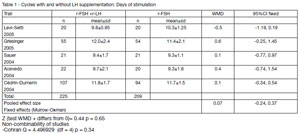
Table 1. Cycles with and without LH supplementation: Days of stimulation
-Total of r-FSH administered (Table 2): Four studies were included (Griesinger et al., 2005; Sauer et al., 2004; Acevedo et al., 2004; Cédrin-Durnerin et al., 2004). The mean amount of r-FSH administered was not significantly different in the 205 women using r-LH than in the 189 women not using (p=0.87; WMD:8.51, 95% CI-98.2, 115.2). There was no heterogeneity in this comparison (Cohran Q:3.18, df:4, p:0.36).
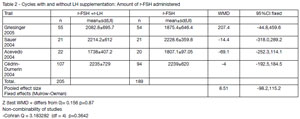
Table 2. Cycles with and without LH supplementation: Amount of r-FSH administered
-Serum estradiol levels on the day of hCG administration (Table 3): All studies were included. Significant higher serum estradiol level was found in 221 women using r-LH than in 205 women not using (p<0.0001; WMD: 514, 95% CI 368, 660). There was no heterogeneity in this comparison (Cohran Q:1.85, df: 4, p=0.76).
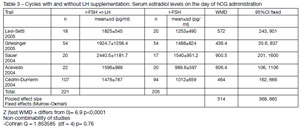
Table 3. Cycles with and without LH supplementation: Serum estradiol levels on the day of hCG administration
-Number of oocytes retrieved (Table 4): Four trials reported this data (Levi-Setti et, in press; Griesinger et al., 2005; Acevedo et al., 2004; Cédrin-Durnerin et al., 2004). The mean number of oocytes retrieved was not significantly different in the 201 women using r-LH than in 185 women not using (p=0.34; WMD:0.41, 95% CI -0.44, 1.3). There was no heterogeneity in this comparison (Cohran Q:0.75, df:3, p:0.85).
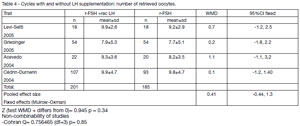
Table 4. Cycles with and without LH supplementation: number of retrieved oocytes.
-The number of mature oocytes (MII) (Table 5): All studies were included. Significant higher number of mature oocytes was retrieved in 214 women using r-LH than in 193 women not using (p=0.0098; WMD:0.88, 95% CI 0.21, 1.54). There was no heterogeneity in this comparison (Cohran Q:6.19 df:4, p:0.18).
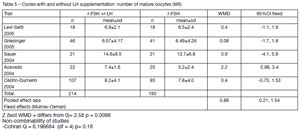
Table 5. Cycles with and without LH supplementation: number of mature oocytes (MII)
SECUNDARY OUTCOME
-Clinical pregnancy rate oocyte retrieval (Table 6): Four studies were included (Levi-Setti et al., in press; Griesinger et al., 2005; Sauer et al., 2004; Cédrin-Durnerin et al., 2004). The CPR per oocyte retrieval procedure was not significantly different transfer in cycles using r-LH (59/200, 29.5%) than in cycles not using (59/186 31.7%) (p=0.69; OR:0.89, 95% CI 0.57, 1.39). There was no heterogeneity in this comparison (Breslow-Day:0.95, df:3, p:0.81; Cochran Q:0.94, df:3, p=0.81).
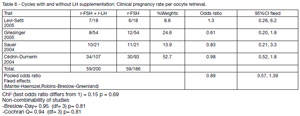
Table 6. Cycles with and without LH supplementation: Clinical pregnancy rate per oocyte retrieval.
-Implantation rate (Table 7): Three studies were included (Levi- Setti et al., in press; Griesinger et al., 2005; Cédrin-Durnerin et al., 2004). The implantation rate was not significantly different in the cycles using r-LH 58/357 (16.2%) than in cycles not using 54/336 (16.1%) (p=0.96; OR:0.99 95% CI-0.66, 1.48). There was no heterogeneity in this comparison (Breslow-Day:2.16, df:2, p=0.34; Cochran Q:2.13, df:2, p=0.34).
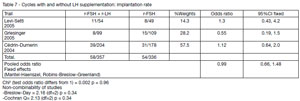
Table 7. Cycles with and without LH supplementation: implantation rate
-Miscarriage rate (Table 8): Two trials were included (Levi-Setti et al., in press; Cédrin-Durnerin et al., 2004). The miscarriage rates were not significantly different in the pregnancies after used r-LH (6/41, 14.6%) than in that did not used (5/36, 13.9%) (p=0.82; OR:1.06, 95% CI-0.29, 3.8). There was no heterogeneity in this comparison (Breslow-Day:0.03, df:1, p=0.86; Cochran Q: 0.03, df:1, p=0.86).
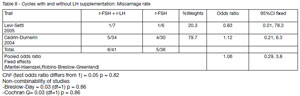
Table 8. Cycles with and without LH supplementation: Miscarriage rate
DISCUSSION
The results that support the hypothesis that an exogenous LH supplementation in the form of r-LH is effective in improving the ovarian response in stimulation for assisted reproduction cycles in patients undergoing IVF/ICSI and using a GnRH antagonist protocol is unclear. Most data available in the medical literature suggest that recombinant gonadotrophins are clearly more efficient than urinary gonadotrophins in inducing multiple follicular growth and maturation (Daya, 2002). The advantages of r-FSH are its excellent consistency from batch to batch and the fact it is free from contaminating human proteins. Although the role of LH in ovulation induction remains controversial, and it is well established that FSH alone can induce follicular growth, small amounts of LH are necessary to promote adequate estradiol secretion and also to allow the follicle to luteinize when exposed to hCG (Couzinet et al.,1988). The action of LH on follicular development is likely not limited to providing androgen substrate for aromatization, but it also exerts a direct effect on the stimulation and modulation of folliculogenesis (Filicori et al., 2001).
On the other hand, the GnRH antagonists are GnRH molecules with amino acid modifications at positions 1,2,3,6,10 and they immediately block the GnRH receptor in a competitive fashion and hence reduce LH and FSH secretion within a period of 8h. The inhibition of LH secretion is more pronounced than that of FSH, this being most likely due to the different forms of gonadotrophin regulation, the prolonged FSH half-life or the immunoactive and bioactive forms of FSH (Matikainen, 1992). GnRH antagonist administration induces a fast and profound pituitary suppression, with a clear advantage in terms of premature LH avoidance. Nevertheless, LH activity is quickly and dramatically reduced in the phase in which this hormone activity is crucial: follicle, which have been recruited in a physiological FSH and LH environment, are dramatically deprived of their LH sustenance (Alviggi et al., 2006).
Garcia-Velasco et al (2001) observed that GnRH antagonist therapy in women undergoing ovarian stimulation had a significant effect on ovarian follicular steroidogenesis. The mean oestradiol concentration in follicular fluid was significantly lower in patients treated with a GnRH antagonist than in those treated with GnRH agonist. Lindheim and Morales (2003) in 37 donor cycles, starting GnRH antagonist administration on day 6 of stimulation, reported that 35% of cycles had a decrease in serum oestradiol prior to hCG administration and 93% of them showed a decrease in serum oestradiol at >3 days after GnRH antagonist administration. In addition, clinical pregnancy rate per initiated cycle [14% (2/14) versus 54% (14/26)], ongoing pregnancy rate per initiated cycle[7% (1/14) versus 46% (12/26)] and implantation rate (4 versus 24%) were all significantly less (p<0.05) following a decrease in serum oestradiol after initiation of GnRH antagonist. They concluded that the use of GnRH antagonists has an unpredictable effect on oestradiol production during follicular recruitment, which appears to adversely affect pregnancy outcome if a decline in oestradiol occurs. The interaction of the antagonist (at clinical working doses) with its receptors and the initiation of any intra-cellular signaling cascade that could affect gene transcription need further demonstration and clarification at the molecular level. Some of the indirect (E2-mediated) action through which the GnRH antagonist could impact cell function, and ultimately implantation rates, can be substantiated and evaluated in a clinical setting. For example, it is well established that the production of some growth factors and peptides involved differentiation and mitosis of the oocyte, the embryo, the endometrium, and the granulose cells, are estrogen dependent. Because the hypoestrogenic environment that develops may compromise cell function, maintaining the E2 synthesis could lessen some of the indirect (E2-mediated) GnRH antagonist action at the ovarian or endometrial levels (Acevedo et al., 2004)
In this meta-analysis, a good effect of r-LH supplementation in ovarian stimulation was observed in the serum estradiol levels on the day of hCG administration. Significant higher serum estradiol level was found in 221 women using r-LH than in 205 women not using (p<0.0001; WMD: 514, 95% CI 368, 660). This result demonstrates that the association of r-LH with r-FSH may prevent a decrease in estradiol after antagonist administration. In addition, significant higher number of mature oocytes was retrieved in 214 women using r-LH than in 193 women not using (p=0.0098; WMD:0.88, 95% CI-0.21, 1.54). Further prospective studies are required to substantiate these facts.
On the other hand, these good results were not observed in total of r-FSH administered (p=0.87; WMD:8.51, 95% CI-98.2,115.2), days of stimulation (p=0.65; WMD:0.07 95% CI-0.24,0.37), number of oocyte retrieval (p=0.34; WMD:0.41, 95% CI-0.44,1.3), the CPR per oocyte retrieval (p=0.69; OR=0.89, 95% CI-0.57,1.39), the implantation rate (p=0.96; OR=0.99 95% CI-0.66,1.48) and miscarriage rate (p=0.82; OR=1.06, 95% CI-0.29,3.8).
In conclusion, considering all the outcomes, probably there is no reason to be concerned that the use of r-LH supplementation could impose harmful effect. Moreover, our results demonstrated that the association of r-LH with r-FSH may prevent any decrease in estradiol after antagonist administration and a significant higher number of mature oocytes were offered for laboratory work. Nevertheless, additional randomized controlled trials are needed to further confirm these results.