JBRA Assist. Reprod. 2026;30(1):39-46
ORIGINAL ARTICLE
doi: 10.5935/1518-0557.20250154
A comparison of simplified versus the original media in standard vapor freezing and in-house vitrification of human sperm
1Division of Reproductive Medicine, Department of Obstetrics and Gynecology, Faculty of Medicine, Chiang Mai University, Chiang Mai 50200, Thailand
2CMEx Fertility Center, Center of Medical Excellence, Chiang Mai University, Chiang Mai 50200, Thailand
CONFLICT OF INTEREST
The authors report no conflicts of interest.
ABSTRACT
Objective: We compared post-cryopreserved outcomes of normozoospermic semen samples after cryopreservation by vitrification and liquid nitrogen vapor freezing, using the original and the simplified preservation media.
Methods: Forty normozoospermic semen samples were used in the study. Post-prepared semen samples were divided into five aliquots: one served as non-cryopreserved control; two were vitrified using in-house (In-house-V) or sucrose media (Simp-V); and the last two aliquots were frozen in liquid nitrogen vapor, using commercial (Com-L) or sucrose media (Simp-L).
Results: Sperm after cryopreservation regardless of the media and method used, significantly decreased in motility, viability, and increased ROS level without changes in sperm morphology and DNA fragmentation. Simplified sucrose freezing medium significantly increases post-thawed motility (57.6% (53.2-68.9) vs. 34.5% (27.3-43.6) in Simp-L and Com-L) and viability (61.0% (52.0-67.8) vs. 37.0% (29.3-46.0) in Simp-L and Com-L) in vapor freezing but significantly decrease post-thawed motility (58.8% (51.4-63.3) vs. 77.8% (70.8-81.3) in Simp-V and In-house-V) and viability (59.0% (53.2-66.0) vs. 75.5% (68.0-83.0) in Simp-V and In-house-V) in vitrification. A simplified medium does not affect sperm morphology, ROS level, and DNA fragmentation.
Conclusions: In liquid nitrogen vapor freezing, a simplified medium significantly improved sperm motility and viability compared with commercial medium. In vitrification, the simplified medium gave inferior results on sperm motility and viability compared to the original preservation medium.
Keywords: simplified medium, sperm cryopreservation, vitrification, vapor freezing
INTRODUCTION
Human sperm cryopreservation is currently an important technique in assisted reproductive technology. There are several sperm cryopreservation techniques and cryoprotective agents (CPAs) available (Agha-Rahimi et al., 2014). CPAs are added before freezing to prevent cryodamage. Several CPAs have been developed and used successfully. CPAs exert their effects via various mechanisms, such as decreasing the freezing point of water and producing membrane protection. Normally, CPAs are categorized into permeable and non-permeable groups. Permeable CPAs are used for routine slow sperm cryopreservation, but high concentrations of these agents show toxicity and decrease sperm fertility potential (Gilmore et al., 1997; Hoffmann et al., 2011). Traditionally, glycerol is the main CPA for sperm freezing but it is considered to be a toxic compound (Vidament et al., 2009).
Liquid nitrogen vapor freezing may be classified as a type of rapid freezing. The mixed sample of spermatozoa and CPAs is loaded into a straw or cryovial and incubated at room temperature. Then, the mixture is exposed to the liquid nitrogen vapor phase at -80°C for about 10 minutes before plunging into liquid nitrogen (Di Santo et al., 2012). A study comparing vapor freezing and slow programmable freezing reported a significantly greater rate of chromatin deterioration with rapid cooling than with slow freezing (Hammadeh et al., 2001). Vitrification is the process of cooling cells at an extremely high rate. With vitrification, liquid turns into a glass-like solidification state, without ice crystal formation. Vutyavanich et al. (2010; 2012) proposed improvement in sperm vitrification through a solid surface vitrification (SSV) system. The cryopreservation medium was modified by reducing the concentration of glycerol from 15% to 10% to minimize CPA toxicity. The results showed significantly improved sperm motility and survival, without change in normal sperm morphology and DNA fragmentation, when compared with the conventional slow programmable freezing. One study showed a significant increase in DNA fragmentation following SSV and rapid freezing techniques (Satirapod et al., 2012), but Vutyavanich et al. (2010; 2012) and Isachenko et al. (2004) observed no significant differences in DNA integrity following vitrification or rapid freezing techniques.
As spermatozoa have scanty, if any, cytoplasm remaining with much sensitivity to permeable CPA. A research question is raised whether sperm cryopreservation outcomes can be improved by omitting permeable CPAs altogether. Woelders (1997) reported a slight improvement in sperm cryopreservation when sucrose rather than trehalose was used as a non-permeable CPA. On the other hand, another study demonstrated a higher glass transition temperature for trehalose than sucrose, implying a better vitrification property of trehalose over sucrose (Simperler et al., 2006). Liu et al. (2016) confirmed that trehalose and sucrose were the most effective CPAs. The study by Rahiminia et al. (2017), using 0.5 M sucrose in sperm vitrification, reported good recovery of motility, morphology, and viability, while sperm chromatin and acrosome integrity remained unaffected.
The objective of this study was to determine whether the simplified cryopreservation medium, containing only sucrose, would result in similar post-cryopreserved outcomes when compared with the original media for sperm vitrification and liquid nitrogen vapor freezing. The outcomes measured were sperm motility, morphology, viability, reactive oxygen species (ROS) level, and sperm DNA fragmentation.
MATERIAL AND METHODS
Participant selection criteria
Semen samples were obtained from male partners of infertile couples, who visited the CMEx Fertility Center at Maharaj Nakorn Chiang Mai Hospital. The samples were collected into sterile containers by masturbation after a two to seven day abstinence. Only semen with normal parameters, according to the World Health Organization reference values (WHO, 2021) were included in the study. The study was reviewed and approved by the Research Ethics Committee, Faculty of Medicine, Chiang Mai University. All participants gave their written informed consent for the use of their semen for research.
Experimental design
Samples were prepared with the density gradient centrifugation method. Liquefied semen samples were layered on top of 80%/40% discontinuous Sil-Select gradients (FertiPro N.V., Beernem, Belgium) and centrifuged at 350 g for ten minutes at 25°C. After that, the sperm pellet was washed twice in sperm washing medium, supplemented with 0.3% (w/v) human serum albumin (HSA; LifeGlobal, Guilford, CT), at 300 g for five minutes. The supernatant was discarded, and the final pellet was resuspended in 500 µL of the same medium and divided into five aliquots. The first 100 µL aliquot served as a non-frozen control and was immediately assessed for sperm motility, kinetics, morphology, viability, ROS levels, and DNA integrity. The remaining four aliquots were cryopreserved by vitrification or liquid nitrogen vapor freezing using the original media for sperm vitrification and liquid nitrogen vapor freezing or the simplified media, containing only sucrose. The flow of the study is shown in Figure 1.
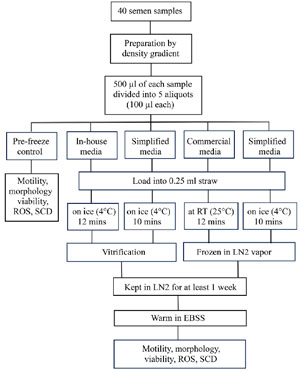
Figure 1. Flow diagram of study. Abbreviation: RT = room temperature, LN2 = liquid nitrogen, ROS = reactive oxygen species, SCD = sperm chromatin dispersion test.
Sperm cryopreservation media
The original media for sperm vitrification using the in-house made medium contained 10% glycerol, 10% HSA, 133 mM glycine, 5.5 mM glucose, 100 mM Trehalose, 12.2 mM sodium pyruvate, and 20 mM HEPES. The in-house medium was a modified human sperm medium by reducing the concentration of glycerol from 15% to 10% to minimize CPA toxicity. More viscosity was created by increasing the HSA 20-fold and replacing 50 mM of sucrose with 100 mM of trehalose (Vutyavanich et al., 2010). The original media for liquid nitrogen vapor freezing using commercial media (Sperm Freezing, Lifeglobal, USA). The simplified medium consisted of 0.5 M of sucrose, HSA (10 g/L), and phosphate-buffered saline (PBS).
Vitrification and warming
Vitrification was performed on the second and third aliquots. The aliquots, containing 100 µl of prepared semen, were mixed dropwise with an equal volume of cryoprotective medium. The second aliquot was mixed with the original in-house medium, while the third aliquot was mixed with the simplified sucrose medium. The mixtures were loaded into 0.25 mL straws and incubated at 4°C for 12 minutes for the second aliquot and 10 minutes for the third aliquot. The straws were then inserted into the holes of a pre-cooled in-house made aluminum block, previously immersed in liquid nitrogen for 10 minutes (Vutyavanich et al., 2010). For warming, the straws were warmed with water at room temperature (25-28˚C). The samples were then washed with EBSS, and centrifuged at 200 g for five minutes to remove cryoprotective agents. Post-warmed samples were immediately assessed for sperm motility, kinetics, morphology, viability, ROS level, and DNA integrity.
Liquid nitrogen vapor freezing and thawing
Liquid nitrogen vapor freezing was performed on the fourth and fifth aliquots. The aliquots, containing 100 µl of prepared semen, were mixed dropwise with an equal volume of cryoprotective medium. The fourth aliquot was mixed with the original commercial sperm freezing medium, then loaded into 0.25 mL straws and left to incubate at room temperature for 12 minutes according to the manufacturer’s recommendation. The fifth aliquot was mixed with the simplified sucrose medium. The mixtures were loaded into 0.25 mL straws and left to incubate at 4°C for 10 minutes as in the study of Rahiminia et al. (2017). After incubation, straws were placed horizontally at 10 cm above liquid nitrogen level for 12 minutes. For thawing, the straws were placed in warm (37˚C) water. The samples were then washed in EBSS and immediately assessed for sperm motility, kinetics, morphology, viability, ROS level, and DNA integrity.
Sperm assessment
Sperm motility and kinetics were assessed using an HTM IVOS II computer-assisted semen analyser (CASA; Hamilton Thorne Biosciences, Beverly, MA), equipped with Clinical Human Motility II software. The kinematic parameters measured included: the velocity of smooth average cell path (VAP), mean curvilinear velocity (VCL), mean straight-line velocity (VSL), the amplitude of lateral head displacement (ALH), percent linearity (LIN=VSL/VCLx100) and percent straightness (STR=VSL/VAPx100).
For sperm morphology assessment, the washed samples were smeared on glass slides and labeled accordingly. They were stained with Diff-Quick and assessed with an HTM IVOS II computer-assisted semen analyser (CASA; Hamilton Thorne Biosciences, Beverly, MA). For every slide, at least 200 spermatozoa were read in duplicates.
Sperm viability was assessed by vital staining using 0.5% (w/v) eosin-Y (Sigma Chemical, St. Louis, MO, USA). Ten µL of each aliquot was mixed with 10 µL of 0.5% (w/v) eosin-Y on a glass slide for at least 30 seconds, and 200 spermatozoa were counted as stained (dead) or unstained (viable) under a light microscope.
The ROS level was assessed by a chemiluminescence technique, using a Glomax 20/20 luminometer (Turner Biosystems Inc., Sunnyvale, CA, USA). In essence, ROS and specific reagents reacted and emitted photons that passed through the photomultiplier tubes of the luminometer. The results were measured as relative light units (RLU) of counted photons per minute (CPM) or mV/s. The reagent was prepared using 20 µl of luminol stock solution (5-amino-2,3-dihydro-1,4-phthalazinedione, Cat. No A8511; Sigma Chemical) mixed with 380 µl of DMSO (Cat. No. D8779; Sigma Chemical) in a foil-covered polystyrene tube. The positive control was a mixture of 400 µl of phosphate-buffered saline (PBS), 50 µl of hydrogen peroxide and 10 µl of luminol reagent. The negative control was a mixture of 400 µl of PBS and 10 µl of luminol reagent. Both positive and negative controls were prepared immediately before use. Four-hundred µl PBS was used to dilute 20 µl of a semen sample from each aliquot, and mixed with 10 µl of luminol reagent. Each sample, including the positive and negative controls, was measured twice, and the crude average value of RLU/sec was corrected by dividing it with the sperm concentration to give the final value of ROS expressed in the unit of RLU/sec/106.
The sperm DNA integrity was assessed by a sperm chromatin dispersion (SCD) test.
The SCD test is based on the principle that embedded sperms in an agarose matrix on a glass slide, following acid denaturation and removal of nuclear proteins. Sperm with DNA fragmentation cannot produce the halo of dispersed DNA loops, whereas the dispersed sperm chromatin is present if DNA is not fragmented (Fernández et al., 2003). The level of DNA fragmentation of sperm was evaluated by DNA Fragmentation Software. We chose this test because of its simplicity, reproducibility, and availability without the need for complex or costly instrumentation (De Jonge, 2002). Moreover, high correlations were found between the SCD test and sperm chromatin structure assay (r=0.71; p<0.001) and between the SCD test and modern TUNEL assay (r=0.70; p<0.001) (Ribas-Maynou et al., 2013).
Statistical analysis
The IBM SPSS Statistics (Version 21.0, Armonk, NY, USA) was used for statistical analysis. The distributions of the variable data were tested with the Kolmogorov-Smirnov test of normality. Mean age, sperm parameters, and normal distribution data were expressed as mean±SD. Comparison of these variables between the groups was accomplished by repeated measure analysis of variance (ANOVA), When there was a significant difference. Bonferroni post hoc tests were performed. On the other hand, abnormal distribution data was expressed as median (interquartile range). Comparison of these variables between the groups was assessed with the use of Friedman’s test, and then pairwise comparisons for the subgroup variables were observed. A p-value of<0.05 was considered to be statistically significant.
RESULTS
Forty normozoospermic semen samples were included in this study. Patients’ age and pre-processing sperm parameters are shown in Table 1. Sperm after cryopreservation regardless of the media and method used, demonstrated a significant decrease in motility and viability, and significantly increased ROS levels. Sperm morphology and DNA fragmentation were comparable in post-cryopreserved sperm and the control (Table 2). A significant decrease in VAP, VSL, VCL and ALH after sperm cryopreservation in both vitrification and liquid nitrogen vapor freezing compared to pre-freeze control. BCF increased significantly and LIN decreased significantly in liquid nitrogen vapor freezing compared to the control (Table 3).
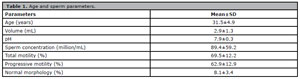
Table 1. Age and sperm parameters.
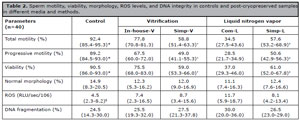
Table 2. Sperm motility, viability, morphology, ROS levels, and DNA integrity in controls and post-cryopreserved samples in different media and methods.
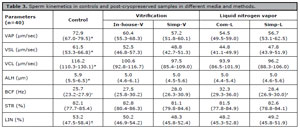
Table 3. Sperm kinemetics in controls and post-cryopreserved samples in different media and methods.
Simplified media and vitrification
A significant decrease in sperm total motility (58.8% (51.4-63.3) vs. 77.8% (70.8-81.3), p<0.001), progressive motility (49.0% (41.1-55.3) vs. 67.5% (60.0-72.0), p<0.001), and viability (59.0% (53.2-66.0) vs. 75.5% (68.0-83.0), p<0.001) in a simplified media group compared to the original in-house media group (Table 2). There were no differences in sperm morphology (12.0% (9.0-16.9) vs. 12.3% (5.3-16.2)), ROS level (8.7 (3.4-15.6) RLU/sec/106vs. 7.4 (2.3-16.5) RLU/sec/106), and DNA fragmentation (27.5% (21.3-37.8) vs. 25.5% (19.3-32.0)) in post-vitrified sperm using simplified media or in-house media (Table 2). There were no differences in sperm kinematics after warming in a simplified media group compared to the original in-house media group (Table 3).
Simplified media and liquid nitrogen vapor freezing
A significant increase in sperm total motility (57.6% (53.2-68.9) vs. 34.5% (27.5-43.6), p<0.001), progressive motility (50.6% (42.9-56.3) vs. 28.5% (21.7-34.9), p<0.001), and viability (61.0% (52.0-67.8) vs. 37.0% (29.3-46.0), p<0.001) in a simplified media group compared to the original commercial media group (Table 2). There were no differences in sperm morphology (12.4% (7.6-16.6) vs. 11.1% (7.4-16.3)), ROS level (8.1 (4.2-13.4) RLU/sec/106vs. 11.7 (5.9-18.7) RLU/sec/106), and DNA fragmentation (26.5% (23.0-39.0) vs. 30.0% (20.0-36.0)) in post-thawed sperm using simplified media or commercial media (Table 2). BCF decreased significantly in post-thaw sperm using simplified media compared to the commercial media, while other kinematic parameters were not different (Table 3).
DISCUSSION
Compared to other cells, the spermatozoa are rather unique in that they contain very scanty cytoplasm, as most cytoplasm has been shed during spermiogenesis. Using cryo-scanning electron microscopy and freeze substitution, Morris et al. (2007) showed that no intracellular ice was formed inside the sperm during rapid cooling. Currently, it is believed that cryodamage to spermatozoa predominantly result from an osmotic imbalance encountered during thawing rather than the formation of intra-cellular ice (John Morris et al., 2012). Sperm membranes are now under focus as the primary site of cryopreservation injury (Sieme et al., 2015). This revolutionized concept raises the question of whether it is necessary to add any permeable CPA, such as glycerol, into the sperm preservation medium to prevent intracellular ice formation. Moreover, the cost of the simplified medium was lower than the commercial medium. The sucrose containing medium was easily prepared and could be used for vitrification and liquid nitrogen vapor freezing. Indeed, some recent studies showed good results of human sperm vitrification using 0.25-0.5 M sucrose, without the addition of glycerol (Isachenko et al., 2011; Rahiminia et al., 2017).
Our study confirmed previous studies that 0.5 M sucrose, without glycerol, can be used effectively to cryopreserve human sperm (Isachenko et al., 2012; Agha-Rahimi et al., 2014; Chen et al., 2015; Slabbert et al., 2015; Rahiminia et al., 2017). The results were better than those using conventional liquid nitrogen vapor freezing in terms of total and progressive motility, and viability. The percentage of spermatozoa with DNA fragmentation and ROS level were slightly lower than that in the conventional liquid nitrogen vapor freezing, but not statistically significant. Our total and progressive motility of 34.5% and 28.5%, respectively, with conventional vapor freezing was similar to other studies by Satirapod et al. (2012), O’Connell et al. (2002), and Tiwari et al. (2017).
A simplified medium gave significantly inferior outcomes than our original in-house medium for sperm vitrification in sperm motility, progressive motility, and viability. This might have been due to the absence of glycerol and the presence of lower protein concentration in the simplified medium. Glycerol might exert other protective effects on sperm membranes rather than its well-known effect in preventing intracellular ice formation. Indeed, in model studies with liposomes, glycerol has been shown to stabilize membranes and prevent freezing-induced leakage of intraliposomal solutes, whereas non-permeable disaccharides, such as sucrose, do not (Oldenhof et al., 2013). Glycerol and protein have antioxidant activity and could be beneficial in counteracting the increased production of ROS occurring during the cryopreservation. The concentration of glycerol in the cryoprotective medium required for optimal sperm survival is unknown (Hammitt et al., 1988). In animals, a concentration as low as 3.5% can be toxic as it can damage the sperm membrane and cause depolymerization of the actin cytoskeleton (Macías García et al., 2012). Our original vitrification medium and the commercial medium for liquid nitrogen vapor freezing contain 10% and 15% glycerol, respectively. When they were diluted with processed sperm samples in a ratio of 1:1, the final glycerol concentration in the final mixture would be 5% and 7.5%, respectively. In our vitrification system, the exposure was done at 4°C, while that in liquid nitrogen vapor freezing, the equilibration was done at room temperature (20-25°C). In principle, exposure to a CPA at a lower temperature would limit its diffusion and toxicity to cells. We, therefore, believed that the poor results obtained with the liquid nitrogen vapor freezing using the commercial medium might, in part, be due to the toxicity of glycerol. In future studies, we should investigate whether the addition of glycerol at a concentration of 5-7% to the simplified sucrose medium would be beneficial.
Grizard et al. (2007) reported that there were changes in sperm kinematics before any impairment of sperm motility. In their study, the affected parameters were the percentage of progressive motile sperm, VAP, and VSL, followed by VCL, whereas ALH was unchanged. In our study, using the same CASA system and analysis setup, we found a similar adverse effect of cryoinjury on sperm motility, VAP, VSL, VCL, and ALH while STR was not affected. Our study found that there was no difference in sperm morphology after cryopreservation. Ozkavukcu et al. (2008) proposed that extracellular ice crystal formation might affect sperm morphology. It may be possible that osmolarity could change during the freezing-thawing process caused by the addition and removal of CPAs followed by the water entry and exit. However, a difference of individual resistance to cryopreservation may explain the contrasting results, despite using the same protocol and automatic method (Maroto-Morales et al., 2016).
We found an increase in the levels of extracellular ROS following cryopreservation, which was in line with other studies by Mazzilli et al. (1995) and Wang et al. (1997). The magnitude of the increase was around double the baseline levels in the control, and there was a statistical difference. It implied that spermatozoa from different individuals differed in their responses to the stress of cryopreservation. We had no information on the levels of intracellular ROS, as we did not measure them in our study.
Hammadeh et al. (2001), and Donnelly et al. (2000) reported an increase in the percentage of sperm DNA fragmentation after cryopreservation. This was not confirmed by our study of vitrification and liquid nitrogen vapor freezing. However, when we replaced the original media with a simplified sucrose medium, the increase in DNA fragmentation was observed in vitrification, while a decrease in DNA fragmentation with liquid nitrogen vapor freezing, but not statistically significant. This implied that the choice of CPAs and/or the cryopreservation techniques could have a significant impact on the outcome of cryopreservation. Other components in the cryopreservation media, such as pyruvate, might add to the protective effects through their antioxidant or other properties (Zini & Al-Hathal, 2011).
There are several limitations in our study. First, we included only 40 normozoospermic males. The result of our study, therefore, might not be applicable to infertile men in general, especially those with abnormal sperm parameters. Second, the freezing and thawing process might be another variable. In routine practice, the cane did not stay submerged in liquid nitrogen all the time. It was lift up above the level of liquid nitrogen from time to time to remove samples from other patients as required. Third, we did not have information on the fertilizing potential of these cryopreserved spermatozoa, as we did not perform any sperm function tests, such as acrosomal reaction and sperm-zona binding tests.
In conclusion, the use of a simplified medium significantly improved sperm motility and viability compared to the commercial medium in liquid nitrogen vapor freezing. On the contrary, a simplified medium is not suitable for vitrification due to the significantly decreased sperm motility and viability when compared to the original preservation medium.
ACKNOWLEDGMENTS
This research was supported by the Faculty of Medicine Endowment Fund for Medical Research, Faculty of Medicine, Chiang Mai University, Chiang Mai, Thailand.
REFERENCES
Agha-Rahimi A, Khalili MA, Nabi A, Ashourzadeh S. Vitrification is not superior to rapid freezing of normozoospermic spermatozoa: effects on sperm parameters, DNA fragmentation and hyaluronan binding. Reprod Biomed Online. 2014;28:352-8. PMID: 24444814 DOI: 10.1016/j.rbmo.2013.11.015 Medline
Chen Y, Li L, Qian Y, Xu C, Zhu Y, Huang H, Jin F, Ye Y. Small-volume vitrification for human spermatozoa in the absence of cryoprotectants by using Cryotop. Andrologia. 2015;47:694-9. PMID: 25081345 DOI: 10.1111/and.12320 Medline
De Jonge C. The clinical value of sperm nuclear DNA assessment. Hum Fertil (Camb). 2002;5:51-3. PMID: 12082207 DOI: 10.1080/1464727022000198922 Medline
Di Santo M, Tarozzi N, Nadalini M, Borini A. Human Sperm Cryopreservation: Update on Techniques, Effect on DNA Integrity, and Implications for ART. Adv Urol. 2012;2012:854837. PMID: 22194740 DOI: 10.1155/2012/854837 Medline
Donnelly ET, O’Connell M, McClure N, Lewis SE. Differences in nuclear DNA fragmentation and mitochondrial integrity of semen and prepared human spermatozoa. Hum Reprod. 2000;15:1552-61. PMID: 10875865 DOI: 10.1093/humrep/15.7.1552 Medline
Gilmore JA, Liu J, Gao DY, Critser JK. Determination of optimal cryoprotectants and procedures for their addition and removal from human spermatozoa. Hum Reprod. 1997;12:112-8. PMID: 9043914 DOI: 10.1093/humrep/12.1.112 Medline
Grizard G, Ouchchane L, Roddier H, Artonne C, Sion B, Vasson MP, Janny L. In vitro alachlor effects on reactive oxygen species generation, motility patterns and apoptosis markers in human spermatozoa. Reprod Toxicol. 2007;23:55-62. PMID: 17049205 DOI: 10.1016/j.reprotox.2006.08.007 Medline
Hammadeh ME, Dehn C, Hippach M, Zeginiadou T, Stieber M, Georg T, Rosenbaum P, Schmidt W. Comparison between computerized slow-stage and static liquid nitrogen vapour freezing methods with respect to the deleterious effect on chromatin and morphology of spermatozoa from fertile and subfertile men. Int J Androl. 2001;24:66-72. PMID: 11298839 DOI: 10.1046/j.1365-2605.2001.00270.x Medline
Hammitt DG, Walker DL, Williamson RA. Concentration of glycerol required for optimal survival and in vitro fertilizing capacity of frozen sperm is dependent on cryopreservation medium. Fertil Steril. 1988;49:680-7. PMID: 3350164 DOI: 10.1016/S0015-0282(16)59840-9 Medline
Hoffmann N, Oldenhof H, Morandini C, Rohn K, Sieme H. Optimal concentrations of cryoprotective agents for semen from stallions that are classified “good” or “poor” for freezing. Anim Reprod Sci. 2011;125:112-8. PMID: 21470802 DOI: 10.1016/j.anireprosci.2011.03.001 Medline
Isachenko E, Isachenko V, Katkov II, Rahimi G, Schöndorf T, Mallmann P, Dessole S, Nawroth F. DNA integrity and motility of human spermatozoa after standard slow freezing versus cryoprotectant-free vitrification. Hum Reprod. 2004;19:932-9. PMID: 15016773 DOI: 10.1093/humrep/deh194 Medline
Isachenko V, Maettner R, Petrunkina AM, Mallmann P, Rahimi G, Sterzik K, Sanchez R, Risopatron J, Damjanoski I, Isachenko E. Cryoprotectant-free vitrification of human spermatozoa in large (up to 0.5 mL) volume: a novel technology. Clin Lab. 2011;57:643-50. PMID: 22029178 Medline
Isachenko V, Maettner R, Petrunkina AM, Sterzik K, Mallmann P, Rahimi G, Sanchez R, Risopatron J, Damjanoski I, Isachenko E. Vitrification of human ICSI/IVF spermatozoa without cryoprotectants: new capillary technology. J Androl. 2012;33:462-8. PMID: 21719694 DOI: 10.2164/jandrol.111.013789 Medline
John Morris G, Acton E, Murray BJ, Fonseca F. Freezing injury: the special case of the sperm cell. Cryobiology. 2012;64:71-80. PMID: 22197768 DOI: 10.1016/j.cryobiol.2011.12.002 Medline
Liu J, Tanrikut C, Wright DL, Lee GY, Toner M, Biggers JD, Toth TL. Cryopreservation of human spermatozoa with minimal non-permeable cryoprotectant. Cryobiology. 2016;73:162-7. PMID: 27498216 DOI: 10.1016/j.cryobiol.2016.08.004 Medline
Macías García B, Ortega Ferrusola C, Aparicio IM, Miró-Morán A, Morillo Rodriguez A, Gallardo Bolaños JM, González Fernández L, Balao da Silva CM, Rodríguez Martínez H, Tapia JA, Peña FJ. Toxicity of glycerol for the stallion spermatozoa: effects on membrane integrity and cytoskeleton, lipid peroxidation and mitochondrial membrane potential. Theriogenology. 2012;77:1280-9. PMID: 22326587 DOI: 10.1016/j.theriogenology.2011.10.033 Medline
Maroto-Morales A, García-Álvarez O, Ramón M, Martínez-Pastor F, Fernández-Santos MR, Soler AJ, Garde JJ. Current status and potential of morphometric sperm analysis. Asian J Androl. 2016;18:863-70. PMID: 27678465 DOI: 10.4103/1008-682X.187581 Medline
Mazzilli F, Rossi T, Sabatini L, Pulcinelli FM, Rapone S, Dondero F, Gazzaniga PP. Human sperm cryopreservation and reactive oxygen species (ROS) production. Acta Eur Fertil. 1995;26:145-8. PMID: 9098477 Medline
Morris GJ, Faszer K, Green JE, Draper D, Grout BW, Fonseca F. Rapidly cooled horse spermatozoa: loss of viability is due to osmotic imbalance during thawing, not intracellular ice formation. Theriogenology. 2007;68:804-12. PMID: 17645937 DOI: 10.1016/j.theriogenology.2007.06.009 Medline
O’Connell M, McClure N, Lewis SE. The effects of cryopreservation on sperm morphology, motility and mitochondrial function. Hum Reprod. 2002;17:704-9. PMID: 11870124 DOI: 10.1093/humrep/17.3.704 Medline
Oldenhof H, Gojowsky M, Wang S, Henke S, Yu C, Rohn K, Wolkers WF, Sieme H. Osmotic stress and membrane phase changes during freezing of stallion sperm: mode of action of cryoprotective agents. Biol Reprod. 2013;88:68. PMID: 23325813 DOI: 10.1095/biolreprod.112.104661 Medline
Ozkavukcu S, Erdemli E, Isik A, Oztuna D, Karahuseyinoglu S. Effects of cryopreservation on sperm parameters and ultrastructural morphology of human spermatozoa. J Assist Reprod Genet. 2008;25:403-11. PMID: 18704674 DOI: 10.1007/s10815-008-9232-3 Medline
Rahiminia T, Hosseini A, Anvari M, Ghasemi-Esmailabad S, Talebi AR. Modern human sperm freezing: Effect on DNA, chromatin and acrosome integrity. Taiwan J Obstet Gynecol. 2017;56:472-6. PMID: 28805603 DOI: 10.1016/j.tjog.2017.02.004 Medline
Ribas-Maynou J, García-Peiró A, Fernández-Encinas A, Abad C, Amengual MJ, Prada E, Navarro J, Benet J. Comprehensive analysis of sperm DNA fragmentation by five different assays: TUNEL assay, SCSA, SCD test and alkaline and neutral Comet assay. Andrology. 2013;1:715-22. PMID: 23843251 DOI: 10.1111/j.2047-2927.2013.00111.x Medline
Satirapod C, Treetampinich C, Weerakiet S, Wongkularb A, Rattanasiri S, Choktanasiri W. Comparison of cryopreserved human sperm from solid surface vitrification and standard vapor freezing method: on motility, morphology, vitality and DNA integrity. Andrologia. 2012;44:786-90. PMID: 22211943 DOI: 10.1111/j.1439-0272.2011.01267.x Medline
Sieme H, Oldenhof H, Wolkers WF. Sperm Membrane Behaviour during Cooling and Cryopreservation. Reprod Domest Anim. 2015;50:20-6. PMID: 26382025 DOI: 10.1111/rda.12594 Medline
Simperler A, Kornherr A, Chopra R, Bonnet PA, Jones W, Motherwell WD, Zifferer G. Glass transition temperature of glucose, sucrose, and trehalose: an experimental and in silico study. J Phys Chem B. 2006;110:19678-84. PMID: 17004837 DOI: 10.1021/jp063134t Medline
Slabbert M, du Plessis SS, Huyser C. Large volume cryoprotectant-free vitrification: an alternative to conventional cryopreservation for human spermatozoa. Andrologia. 2015;47:594-9. PMID: 25040423 DOI: 10.1111/and.12307 Medline
Tiwari A, Tekcan M, Sati L, Murk W, Stronk J, Huszar G. A new media without animal component for sperm cryopreservation: motility and various attributes affecting paternal contribution of sperm. J Assist Reprod Genet. 2017;34:647-57. PMID: 28281145 DOI: 10.1007/s10815-017-0888-4 Medline
Vidament M, Vincent P, Martin FX, Magistrini M, Blesbois E. Differences in ability of jennies and mares to conceive with cooled and frozen semen containing glycerol or not. Anim Reprod Sci. 2009;112:22-35. PMID: 18502059 DOI: 10.1016/j.anireprosci.2008.03.016 Medline
Vutyavanich T, Lattiwongsakorn W, Piromlertamorn W, Samchimchom S. Repeated vitrification/warming of human sperm gives better results than repeated slow programmable freezing. Asian J Androl. 2012;14:850-4. PMID: 23064685 DOI: 10.1038/aja.2012.106 Medline
Vutyavanich T, Piromlertamorn W, Nunta S. Rapid freezing versus slow programmable freezing of human spermatozoa. Fertil Steril. 2010;93:1921-8. PMID: 19243759 DOI: 10.1016/j.fertnstert.2008.04.076 Medline
Wang AW, Zhang H, Ikemoto I, Anderson DJ, Loughlin KR. Reactive oxygen species generation by seminal cells during cryopreservation. Urology. 1997;49:921-5. PMID: 9187701 DOI: 10.1016/S0090-4295(97)00070-8 Medline
Woelders H. Fundamentals and recent development in cryopreservation of bull and boar semen. Vet Q. 1997;19:135-8. PMID: 9323856 DOI: 10.1080/01652176.1997.9694758 Medline
Zini A, Al-Hathal N. Antioxidant therapy in male infertility: fact or fiction? Asian J Androl. 2011;13:374-81. PMID: 21516118 DOI: 10.1038/aja.2010.182 Medline