JBRA Assist. Reprod. 2024;28(3):418-423
ORIGINAL ARTICLE
doi: 10.5935/1518-0557.20240016
The effects of endometrial thickness on outcomes of pregnancy following embryo transfer: A retrospective cohort
1Imam Reza Hospital, Department of Obstetrics and Gynecology, Faculty of Medicine, Aja University of Medical Sciences, Tehran, Iran
2Department of General Surgery, Shahid Modarres Hospital, Faculty of Medicine, Shahid Beheshti University of Medical Sciences, Tehran, Iran
3Be’sat Hospital, Faculty of Medicine, Aja University of Medical Sciences, Tehran, Iran
CONFLICT OF INTERESTS
None.
ABSTRACT
Objective: The safety of assisted reproductive technology can be assessed by examining birth weight as an outcome measure. The objective of this study was to evaluate the effect of endometrial thickness during embryo transfer on newborn birth weight and preterm labor.
Methods: We conducted a retrospective cohort study at the infertility department of a teaching hospital affiliated with a university of medical sciences. Eligible women were ≥18 years old and conceived a singleton pregnancy with embryo transfer and an endometrial thickness of ≥7 mm. None of the patients had diabetes, blood hypertension, and polycystic ovarian syndrome. We assessed maternal and newborn characteristics and perinatal pregnancy outcomes.
Results: In total, 100 eligible patients with a mean (SD) age of 32.8 (6.2) years were included. The mean endometrial thickness during embryo transfer was 9.1 (1.2) mm, and the mean birth weight was 3040.7 (565.3)g. There were no statistically significant associations between endometrial thickness and preterm labor (p=0.215) and between endometrial thickness and stillbirth or intra-uterine fetal death (p=0.880). However, after adjusting for confounding factors, the association of endometrial thickness with birth weight was statistically significant [b=124.6 (51.6), p=0.018].
Conclusions: Within the range of ≥7mm, endometrial thickness during embryo transfer is a predictor of newborn weight; however, it is not related to the risk of preterm labor, stillbirth, or intra-uterine fetal death.
Keywords: assisted reproduction, embryo transfer, endometrial thickness, birth weight, preterm labor, pregnancy
INTRODUCTION
The use of assisted reproductive technology (ART) has increased substantially over time, with ART procedures now accounting for 1.5 to 5.9% of all births in high-income countries (da Silva et al., 2020). However, some studies have suggested that ART singletons are at an increased risk of preterm birth, low birth weight (LBW), congenital anomalies, and perinatal mortality (Banica et al., 2021; Chang et al., 2020). Despite these risks, the number of pregnancies conceived through ART continues to grow (Guo et al., 2020). The effects of ART on newborn health remain an open question (da Silva et al., 2020), as early life events are believed to play a crucial role in modulating the risk of certain diseases during later periods (Mohammadi et al., 2023; Nobile et al., 2022). Meanwhile, ART has undergone considerable changes over the last decade as well (Chang et al., 2020; Kushnir et al., 2017; Reig & Seli, 2019). Consequently, research is still needed to investigate the association of ART with pregnancy outcomes (da Silva et al., 2020).
Studies have shown that endometrial thickness (EMT) is associated with the outcomes of pregnancies conceived through ART (Kasius et al., 2014). A thicker endometrium is believed to be beneficial for proper implantation and the ultimate success of ART procedures (Banker et al., 2021). However, there is no clear consensus on the ideal EMT for successful pregnancy outcomes, with varying opinions and recommendations among fertility specialists (Mahajan & Sharma, 2016). Many studies suggest that a thickness of 7 mm or more is associated with a high chance of pregnancy success (Liu et al., 2018; Wang et al., 2018), while others have found that a thickness of 9 mm or more is ideal (Zhao et al., 2012). More data are required to enhance comprehension of the precise correlation between EMT and ART outcomes, thereby enabling the development of more effective fertility interventions (Kasius et al., 2014; Mahajan & Sharma, 2016). For the safety evaluation and standardization of the practice, the perinatal outcomes of ART still require careful evaluation (Beltran Anzola et al., 2019; Kushnir et al., 2017).
We conducted this study to evaluate the effect of EMT on the outcomes of ART. Our hypothesis was that EMT affects birth weight (BW) and the risk of preterm delivery. We incorporated a number of maternal characteristics into our statistical models to control their confounding effects on the relations between EMT and ART outcomes.
METHODS
Design and setting
This study was a retrospective cohort analysis of deliveries following ART between 2018 and 2022. All patients were treated for infertility at the Department of Infertility at a teaching hospital affiliated with a University of Medical Sciences. The department is well-equipped and the hospital is a large referral and subspecialty center.
Ethics approval
The study protocol was conducted in accordance with the Declaration of Helsinki. Ethics approval was obtained from the Institutional Review Board (IRB) of the University of Medical Sciences. The study used information from participants’ medical records and did not involve any measurements on patients. No identifying information was extracted from patients’ records. All participants provided written informed consent for their treatment and received verbal and written explanations of the nature and purpose of the procedures.
Eligibility
The study included women aged 18 years or older who had conceived a singleton pregnancy of 22 weeks or more or weighing 500g or more using ART. Based on the available information, the procedures were performed for patients with tubal factor infertility, polycystic ovary syndrome, light to moderate decreased semen quality in the male partner, or unexplained infertility. None of the included patients had ovarian cysts larger than 4 cm, hypogonadotropic hypogonadism, endometriosis stage 3-4, and liver, kidney, or thyroid disease. The procedures were not prescribed for women with severe diabetes, cardiovascular disease, or other comorbidities that interfered with the treatments. Women who developed gestational hypertension or diabetes, those who underwent previous in-vitro fertilization or intracytoplasmic sperm injection with their current partner, and users of donor oocytes or frozen oocytes were excluded as well. Patients with incomplete records were also excluded.
Protocols and Procedures
ART
We used controlled ovary stimulation for ICSI and gonadotropin-releasing hormone agonists or antagonists to prevent premature ovulation. Follicle-stimulating hormone injections were administered until the follicular diameter of 18 mm was reached (Huang et al., 2022; Ribeiro & Sousa, 2023; Rodriguez-Wallberg et al., 2022). A 10000-unit human chorionic gonadotropin (hCG) was injected and after 36 hours the oocytes were retrieved using a transvaginal ultrasound probe to guide a specialized needle through the vaginal wall and into the ovaries and were fertilized with husband sperms. If endometrium was at least 7 mm, progesterone was administered for 3 or 5 days and then the embryo or blastocyst was transferred. For frozen-ET, retrieved oocytes were fertilized in the laboratory with ICSI and the embryo was cryopreserved using vitrification (Arian et al., 2023; Lee et al., 2022; Roelens & Blockeel, 2022). The endometrium was primed with estradiol until the EMT reached at least 7 mm, progesterone was administered for 3 days, and the frozen embryo was thawed and transferred into the uterus using a flexible catheter under ultrasound guidance. Pregnancy was investigated two weeks later using a serum beta-hCG test and sonography.
Endometrial thickness
The EMT (mm) was assessed by measuring the maximum distance between the endometrial-myometrial interface of the anterior and posterior walls of the uterus in the median longitudinal plane (Zhao et al., 2012). Sonography facilitates precise measurements of structural thickness in various anatomical contexts (Mohammadi & Mohammadi, 2023). Transvaginal sonography was employed by obstetricians for accurate measurements. A high-frequency transvaginal ultrasound probe operating at a frequency of 8 MHz was utilized. To maintain patient safety and aseptic conditions, the probe was sterilized and covered with a disposable sheath. The measurement was performed 11-12 hours prior to hCG injection using Doppler Ultrasound (E-CUBE 9, Alpinion Medical Systems Co., Ltd., Seoul, Republic of Korea). Before the procedure, patients should have a full bladder. The patient was positioned on an examination table, with the pelvic area exposed. Careful insertion of the transabdominal probe was performed by the sonographer. The probe was connected to a high-resolution ultrasound machine. During the examination, the identification of the thickest segment of the endometrium was carried out, and measurements were taken at multiple points to ensure accuracy.
Data collection
Body mass index (BMI; kg/m2) was calculated as the weight (kg) divided by the square of height (m2). Systolic blood pressure (SBP) and diastolic blood pressure (DBP) were measured using a cuff mercury sphygmomanometer following 10 minutes of rest. Blood hypertension was identified in patients who exhibited SBP values greater than or equal to 130 mmHg and/or DBP of 85 mmHg or higher. Additionally, patients who had a history of hypertension and were receiving anti-hypertensive drug treatment were also classified as having blood hypertension. Gestational hypertension was identified when the blood pressure exceeded 140/90 mm Hg in a woman who had normal blood pressure prior to 20 weeks of gestation and lacked proteinuria, (Hasan et al., 2020). Preeclampsia was diagnosed when a patient with gestational hypertension also presented with proteinuria (Xiong et al., 2002). The investigation for diabetes involved assessing fasting blood sugar (FBS), considering a value of 95 mg/dL or higher, or the use of medication for elevated glucose levels. Gestational diabetes was diagnosed if two or more of the following criteria were met: FBS of 95 mg/dL or higher, a one-hour oral glucose tolerance test result of 180 mg/dL or higher, a two-hour result of 155 mg/dL or higher, or a three-hour result of 140 mg/dL or higher (Shokri et al., 2022).
Statistical analyses
Continuous variables are presented as mean (SD), while categorical data are described as absolute numbers (%). To compare the means of continuous variables, independent t-tests were utilized. Differences in categorical variables among the study subgroups were examined using χ2 tests. Furthermore, a multivariable linear model was developed to predict neonates’ birth weight (BW) incorporating maternal characteristics and neonates’ sex as predictor variables. The level of significance was set at two-tailed α=0.05. All statistical analyses were carried out using R version 4.0.2 for Windows (https://www.r-project.org/).
RESULTS
Of 219 included patients, 23 women were still pregnant, 12 had thyroid disease, 11 developed gestational diabetes, 11 were diagnosed as having gestational hypertension, 31 conceived twins or multiple pregnancies, 22 were users of donated oocytes, and 9 had incomplete records. The analytic sample included 100 patients with a mean (SD) age of 32.8 (6.2) years and a minimum and maximum age of 19 and 46 years. Table 1 shows the characteristics of the study sample.
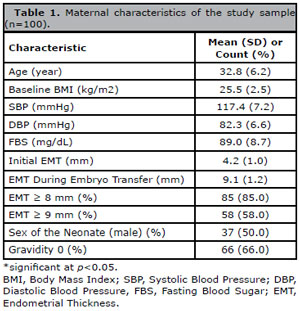
Table 1. Maternal characteristics of the study sample (n=100).
*significant at p<0.05.
BMI, Body Mass Index; SBP, Systolic Blood Pressure; DBP, Diastolic Blood Pressure, FBS, Fasting Blood Sugar; EMT, Endometrial Thickness.
The mean EMTs were 9.2 (1.2) and 9.0 (1.1) mm in non-preterm and preterm neonates, respectively. Univariate analysis showed that there was no statistically significant relationship between the EMT and preterm labor [t(93.4)=1.248, p=0.215, Cohen’s d(95%CI)=0.26 (-0.15, 0.66). Similarly, we did not find a significant association between the EMT and stillbirth or IUFD [9.1 (1.2) vs. 9.1 (1.1) mm in alive and dead neonates, respectively; t(50.5)=0.151, p=0.880, d=0.04 (-0.51, 0.59)]. However, there was a significant correlation between the EMT and the BW, Pearson’s r (95%CI)=0.3 (0.1, 0.5), t(72)=2.404, p=0.018. Figure 1 illustrates the relationships between EMT and preterm labor or BW.
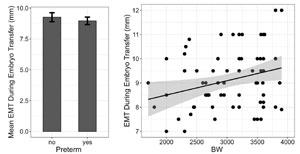
Figure 1. (Left) The relationship between mean EMT and preterm labor. Error bars represent 95%CI for mean estimation. (Right) The association between EMT and BW. The black line represents linear regression and the shaded gray area displays the confidence interval around the regression line. There is a positive linear relationship between EMT and BW. The narrow confidence interval shows that the regression line fits the data well. EMT, Endometrial Thickness; BW, Birth Weight.
To investigate the effects of EMT on BW we developed a multivariable linear model for predicting BW adjusted for age, baseline BMI, FBS, gravidity, SBP, and neonate’s sex. The stepwise model selection was performed using Akaike Information Criterion. Table 2 presents the result of the linear regression, F(4, 69)=3.850, p=0.007, adjusted R squared = 0.135. Overall, the model implied that EMT was a significant predictor of BW. Although maternal FBS and age were not significant predictors of neonatal BW, they approached significance with a p value of 0.068 and 0.092. We investigated the criteria for EMT of 8 and 9 mm concerning pregnancy outcomes (Table 3). Our analyses showed that EMT ≥8 was a significant predictor of AGA, while no other comparisons reached statistical significance. As a conservative approach, our results indicated that an EMT of ≥9 was not associated with adverse pregnancy outcomes. However, an EMT of ≥8 was sufficient to ensure a safe pregnancy.
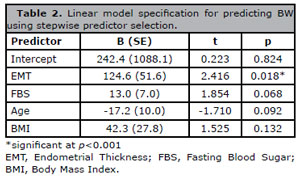
Table 2. Linear model specification for predicting BW using stepwise predictor selection.
*significant at p<0.001
EMT, Endometrial Thickness; FBS, Fasting Blood Sugar; BMI, Body Mass Index.
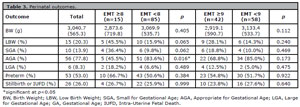
Table 3. Perinatal outcomes.
*significant at p<0.05
BW, Birth Weight; LBW, Low Birth Weight; SGA, Small for Gestational Age; AGA, Appropriate for Gestational Age; LGA, Large for Gestational Age; GA, Gestational Age; IUFD, Intra-Uterine Fetal Death.
DISCUSSION
We conducted this study to investigate the effects of EMT during embryo transfer on infant BW and the rate of preterm labor. Our study included patients without any pregnancy complications, and all participating mothers had an EMT of at least 7 mm at the time of embryo transfer. Our findings indicated that there was no statistically significant association between the EMT and the occurrence of preterm labor. Similarly, we did not observe a significant association between the EMT and the incidence of stillbirth or IUFD. However, we identified a significant correlation between the EMT and BW. The multivariable linear model, adjusted for age, baseline BMI, FBS levels, gravidity, SBP, and the sex of the neonate, confirmed the significant role of EMT in predicting neonatal BW. In our study, we evaluated two criteria for EMT, specifically 8 mm and 9 mm, in relation to pregnancy outcomes. Our analyses revealed that an EMT of ≥8 mm was a significant predictor of appropriate-for-gestational-age (AGA) neonates, while none of the other comparisons reached statistical significance. Taking a conservative approach, our results indicated that an EMT of ≥9 mm is not associated with adverse pregnancy outcomes. However, an EMT of ≥8 mm was considered sufficient to ensure a safe pregnancy. Some of our findings are consistent with those reported in the existing literature.
Researchers investigated the roles of EMTs on pregnancy outcomes (Ma et al., 2017; Martel et al., 2021; Shaodi et al., 2020; Zhang et al., 2019; Zhang et al., 2023). In one study, after adjusting for maternal age and BMI, a multivariate logistic model identified a significant association between EMT and live birth rate with a lower live birth in women with EMT ≤8 mm (Ma et al., 2017). In another study conducted by Shaodi et al. (2020), the impact of EMT on the embryo transfer day on pregnancy outcomes was assessed. A multivariable model was adjusted for the age, duration of infertility, BMI, infertility type, and number and type of embryos transferred. They found a significant correlation between the EMT ≥8.7 mm and the live birth rate and concluded that the live birth rate would be reduced with a very thin endometrium. (Shaodi et al., 2020). In a recent retrospective cohort study, Martel et al. (2021) investigated the effects of EMT on BW and obstetric complication rate after hormone-replaced frozen-ET. The median endometrial thickness was 8.60 mm. The sample was dichotomized into two groups of EMT <7 and ≥7 mm. Neonates born from EMT <7 mm were born earlier and with lower BW (2,749.9 vs. 3,345.2 g). Nevertheless, the EMT was not significantly associated with obstetric complications, even when adjusted for age and medical history. They showed that EMT was not associated with the incidence of preterm birth (p=0.67) and that the rates of preterm birth were not statistically different in women with a thin versus thick endometrium (28.6% vs. 8.5%, p=0.12). Moreover, there was no significant difference in rates of SGA infants between mothers with an EMT of <7 and those with an ETM of ≥7 mm (20.0% vs. 3.0%, p=0.15). Martel et al. (2021) reported that EMT was significantly correlated with birth weight (p<0.03). In a study conducted by Zhang et al. (2023) on frozen-ET, the mean birth weight was 85.1 g higher in the EMT ≥ 12 mm group and 25.9 g higher in the 8-12 mm EMT group than in the EMT <8 mm group. They concluded that the BW is lower for newborns delivered by patients with a thinner endometrium. A significant difference in BW has been reported in another study comparing EMT <8 and EMT ≥10 mm (Zhang et al., 2019).
Our study particularly replicated some of Martel’s results (Martel et al., 2021). While our model was adjusted for the known confounders of BW, we lowered the likelihood of bias at the level of the study design by restricting our sample to mothers without health unfavorable conditions. Moreover, we included patients with ≥7 mm EMT for embryo transfer. These allowed us to select a more homogenous sample and lower the effects of factors interacting with normal BW. In our multivariable model, we incorporated EMT as a continuous variable instead of a dichotomous feature. This prevented the loss of information by categorizing EMTs. However, our univariate analysis did not reveal an important difference in the outcomes of pregnancy using EMT cutoffs of 8 and 9 mm. Overall, the mechanism underlying the relationship between EMT and neonatal BW is multifactorial. However, it is believed that a thin endometrium may lead to higher oxygen tension and increases exposure to reactive oxygen species that can be unhealthy for the fetus (Casper, 2011). Thin endometria lack a functional layer which means that the fetus is exposed to the large spiral arteries and increased oxygen tension, often resulting in a lack of oxygen supply (Casper, 2011). Deficiencies in deep placentation and remodeling of arteries as a result of a thin endometrium can adversely affect blood flow to the placenta and uteroplacental circulation, ultimately affecting the developing fetus (Zhang et al., 2019). Meanwhile, additional research is still needed to investigate how the thickness of the endometrium is associated with specific obstetric complications and to select the optimal EMT cutoff for clinical decision-making.
Limitations
The study presented in this manuscript has some limitations that should be considered when interpreting the results. First, this study was a retrospective cohort, and the sample was limited to patients treated at a single center. Consequently, the generalizability of the findings to a broader population may be limited. Furthermore, we assessed short-term outcomes and did not investigate long-term effects, such as the potential impact of EMT on child development or long-term health outcomes. Conducting a long-term study would provide a valuable complement to the assessment of the safety of existing EMT criteria. Moreover, while we attempted to control for potential confounding factors in our statistical analysis, there may still be unmeasured confounders that could affect the results. A larger sample size is necessary when incorporating a substantial number of covariates. In our study, we specifically included mothers who did not have significant obesity, HTN, or diabetes. To establish and generalize our findings, further prospective longitudinal studies with larger sample sizes are warranted. Particularly, the recruitment of specific patient groups, such as individuals with pregnancy complications or baseline health conditions, and extending the follow-up period would contribute to a more comprehensive and generalized conclusion. These modifications would enable a deeper understanding of the relationship between endometrial thickness EMT and the various outcomes of interest.
We investigated the relationship between the EMT during embryo transfer and BW or preterm labor. All participating mothers had an EMT of at least 7 mm at the time of embryo transfer. The results indicated that an EMT of ≥7 mm did not demonstrate a significant association with preterm labor, and stillbirth or IUFD. However, our adjusted model revealed that the EMT plays a significant role in predicting newborn weight. In a conservative approach, we found that newborns resulting from embryo transfers with maternal EMT ≥9 mm did not show an increased risk for unfavorable pregnancy outcomes. However, our study revealed that EMT ≥8 mm would be safe for newborn health as well. These findings suggest that maintaining an EMT of at least 8 mm during embryo transfer is associated with favorable outcomes for newborns, while an EMT of 9 mm or more reduces the likelihood of adverse pregnancy outcomes to a greater extent.
Highlights
• EMT plays a significant role in predicting newborn weight.
• An EMT of ≥7 mm did not demonstrate a significant association with preterm labor.
• An EMT of ≥7 mm did not increase the risk of stillbirth or IUFD.
• Conservatively, an EMT ≥9 mm did not increase the risk of pregnancy complications.
• An EMT ≥8 mm would be safe for the newborn health as well.
Abbreviations
ART, Assisted Reproductive Technology
BMI, Body Mass Index
BW, Birth Weight
DBP, Diastolic Blood Pressures
ET, Embryo Transfer
FBS, Fasting Blood Sugar
GA, Gestational Age
hCG, human Chorionic Gonadotropin
LBW, Low Birth Weight
LGA, Large for Gestational Age
SBP, Systolic Blood Pressures
SD, Standard Deviation
SGA, Small for Gestational Age
REFERENCES
Arian SE, Hessami K, Khatibi A, To AK, Shamshirsaz AA, Gibbons W. Endometrial receptivity array before frozen embryo transfer cycles: a systematic review and meta-analysis. Fertil Steril. 2023;119:229-38. PMID: 36414088. DOI: 10.1016/j.fertnstert.2022.11.012 Medline
Banica AM, Popescu SD, Vladareanu S. Obstetric and Perinatal Complications Associated with Assisted Reproductive Techniques - Review. Maedica. 2021;16:493-8. PMID: 34925608. DOI: 10.26574/maedica.2020.16.3.493 Medline
Banker M, Arora P, Banker J, Shah S. A Comparative Study to Assess the Efficacy of Two Different Estradiol Formulations during In Vitro Fertilization. Int J Reprod Med. 2021;2021:3153307. PMID: 34423024. DOI: 10.1155/2021/3153307 Medline
Beltran Anzola A, Pauly V, Riviere O, Sambuc R, Boyer P, Vendittelli F, Gervoise-Boyer MJ. Birthweight of IVF children is still a current issue and still related to maternal factors. Reprod Biomed Online. 2019;39:990-9. PMID: 31740225. DOI: 10.1016/j.rbmo.2019.09.014 Medline
Casper RF. It’s time to pay attention to the endometrium. Fertil Steril. 2011;96:519-21. PMID: 21880272. DOI: 10.1016/j.fertnstert.2011.07.1096 Medline
Chang HY, Hwu WL, Chen CH, Hou CY, Cheng W. Children Conceived by Assisted Reproductive Technology Prone to Low Birth Weight, Preterm Birth, and Birth Defects: A Cohort Review of More Than 50,000 Live Births During 2011-2017 in Taiwan. Front Pediatr. 2020;8:87. PMID: 32232018. DOI: 10.3389/fped.2020.00087 Medline
da Silva SG, da Silveira MF, Bertoldi AD, Domingues MR, Dos Santos IDS. Maternal and child-health outcomes in pregnancies following Assisted Reproductive Technology (ART): a prospective cohort study. BMC Pregnancy Childbirth. 2020;20:106. PMID: 32079534. DOI: 10.1186/s12884-020-2755-z Medline
Guo Y, Sun Y, Yang H, Xu Y, Xue Q, Kuai Y, Gao Y, Dai F, Guo Y. Comparison of the rates of preterm birth and low birth weight of vanishing twin and primary pregnancies conceived with assisted reproductive technology. J Perinat Med. 2020;49:50-3. PMID: 32804679. DOI: 10.1515/jpm-2020-0176 Medline
Hasan SMT, Ahmed SI, Khan MA, Sarker SA, Ahmed T. Achieving Optimal Gestational Weight Gain, Birth Weight, and Perinatal Outcomes Among Pregnant Women at Risk of Hypertension: Protocol for a Pilot Randomized Controlled Trial. JMIR Res Protoc. 2020;9:e16676. PMID: 32459639. DOI: 10.2196/16676 Medline
Huang JX, Gao YQ, Chen XT, Han YQ, Song JY, Sun ZG. Impact of intracytoplasmic sperm injection in women with non-male factor infertility: A systematic review and meta-analysis. Front Reprod Health. 2022;4:1029381. PMID: 36388149 DOI: 10.3389/frph.2022.1029381 Medline
Kasius A, Smit JG, Torrance HL, Eijkemans MJ, Mol BW, Opmeer BC, Broekmans FJ. Endometrial thickness and pregnancy rates after IVF: a systematic review and meta-analysis. Hum Reprod Update. 2014;20:530-41. PMID: 24664156 DOI: 10.1093/humupd/dmu011 Medline
Kushnir VA, Barad DH, Albertini DF, Darmon SK, Gleicher N. Systematic review of worldwide trends in assisted reproductive technology 2004-2013. Reprod Biol Endocrinol. 2017;15:6. PMID: 28069012 DOI: 10.1186/s12958-016-0225-2 Medline
Lee JC, Badell ML, Kawwass JF. The impact of endometrial preparation for frozen embryo transfer on maternal and neonatal outcomes: a review. Reprod Biol Endocrinol. 2022;20:40. PMID: 35227270 DOI: 10.1186/s12958-021-00869-z Medline
Liu KE, Hartman M, Hartman A, Luo ZC, Mahutte N. The impact of a thin endometrial lining on fresh and frozen-thaw IVF outcomes: an analysis of over 40 000 embryo transfers. Hum Reprod. 2018;33:1883-8. PMID: 30239738 DOI: 10.1093/humrep/dey281 Medline
Ma NZ, Chen L, Dai W, Bu ZQ, Hu LL, Sun YP. Influence of endometrial thickness on treatment outcomes following in vitro fertilization/intracytoplasmic sperm injection. Reprod Biol Endocrinol. 2017;15:5. PMID: 28056983 DOI: 10.1186/s12958-016-0222-5 Medline
Mahajan N, Sharma S. The endometrium in assisted reproductive technology: How thin is thin? J Hum Reprod Sci. 2016;9:3-8. PMID: 27110071 DOI: 10.4103/0974-1208.178632 Medline
Martel RA, Blakemore JK, Grifo JA. The effect of endometrial thickness on live birth outcomes in women undergoing hormone-replaced frozen embryo transfer. F S Rep. 2021;2:150-5. PMID: 34278346 DOI: 10.1016/j.xfre.2021.04.002 Medline
Mohammadi T, Hooshanginezhad Z, Mohammadi B, Dolatshahi S. The association of stroke risk factors with the future thickness of carotid atherosclerotic plaques. Neurol Res. 2023;45:818-26. PMID: 37125820 DOI: 10.1080/01616412.2023.2208484 Medline
Mohammadi T, Mohammadi B. Neuropsychological features in children and adults with congenital heart disease: an exploratory data analysis. Psychol Health Med. 2023;28:693-706. PMID: 36377086 DOI: 10.1080/13548506.2022.2147558 Medline
Nobile S, Di Sipio Morgia C, Vento G. Perinatal Origins of Adult Disease and Opportunities for Health Promotion: A Narrative Review. J Pers Med. 2022;12:157. PMID: 35207646 DOI: 10.3390/jpm12020157 Medline
Reig A, Seli E. The association between assisted reproductive technologies and low birth weight. Curr Opin Obstet Gynecol. 2019;31:183-7. PMID: 30893135 DOI: 10.1097/GCO.0000000000000535 Medline
Ribeiro S, Sousa M. In Vitro Fertilisation and Intracytoplasmic Sperm Injection predictive factors: A review of the effect of female age, ovarian reserve, male age, and male factor on IVF/ICSI treatment outcomes. JBRA Assist Reprod. 2023;27:97-111. PMID: 35916467 DOI: 10.5935/1518-0557.20220000 Medline
Rodriguez-Wallberg KA, Nilsson HP, Lind T. Live birth and pregnancy rates after in vitro fertilization/intracytoplasmic sperm injection in women with previous unilateral oophorectomy: a systematic review and meta-analysis. Fertil Steril. 2022;117:992-1002. PMID: 35277262 DOI: 10.1016/j.fertnstert.2022.01.033 Medline
Roelens C, Blockeel C. Impact of different endometrial preparation protocols before frozen embryo transfer on pregnancy outcomes: a review. Fertil Steril. 2022;118:820-7. PMID: 36273850 DOI: 10.1016/j.fertnstert.2022.09.003 Medline
Shaodi Z, Qiuyuan L, Yisha Y, Cuilian Z. The effect of endometrial thickness on pregnancy outcomes of frozen-thawed embryo transfer cycles which underwent hormone replacement therapy. PLoS One. 2020;15:e0239120. PMID: 32970718 DOI: 10.1371/journal.pone.0239120 Medline
Shokri M, Rizebandi M, Karimi P, Badfar G, Nasirkandy MP, Kalvandi G, Rahmati S. Association between Maternal Birth Weight and Gestational Diabetes Mellitus: A Systematic Review and Meta-Analysis. J Obstet Gynaecol India. 2022;72:125-33. PMID: 35492858 DOI: 10.1007/s13224-022-01645-8 Medline
Wang Y, Zhu Y, Sun Y, Di W, Qiu M, Kuang Y, Shen H. Ideal embryo transfer position and endometrial thickness in IVF embryo transfer treatment. Int J Gynaecol Obstet. 2018;143:282-8. PMID: 30238667 DOI: 10.1002/ijgo.12681 Medline
Xiong X, Demianczuk NN, Saunders LD, Wang FL, Fraser WD. Impact of preeclampsia and gestational hypertension on birth weight by gestational age. Am J Epidemiol. 2002;155:203-9. PMID: 11821244 DOI: 10.1093/aje/155.3.203 Medline
Zhang J, Liu H, Mao X, Chen Q, Si J, Fan Y, Xiao Y, Wang Y, Kuang Y. Effect of endometrial thickness on birthweight in frozen embryo transfer cycles: an analysis including 6181 singleton newborns. Hum Reprod. 2019;34:1707-15. PMID: 31398256 DOI: 10.1093/humrep/dez103 Medline
Zhang X, Liang L, Hu Y, Zhang Z, Wu Y, Zhang X, Wu X. A thinner endometrium is associated with lower newborn birth weight during in vitro fertilization-frozen-embryo transfer: a cohort study. Gynecol Endocrinol. 2023;39:2217269. PMID: 37282886 DOI: 10.1080/09513590.2023.2217269 Medline
Zhao J, Zhang Q, Li Y. The effect of endometrial thickness and pattern measured by ultrasonography on pregnancy outcomes during IVF-ET cycles. Reprod Biol Endocrinol. 2012;10:100. PMID: 23190428 DOI: 10.1186/1477-7827-10-100 Medline