JBRA Assist. Reprod. 2026 2026;00(0):00-00
ORIGINAL ARTICLE
doi: 10.5935/1518-0557.20260077
Modified double trigger versus recombinant hCG alone for final oocyte maturation in IVF-ICSI: Impact on oocyte and embryological outcomes
1Department of Reproductive Endocrinology and Infertility, Hospital Ángeles Pedregal, UNAM, Ciudad de México, Mexico
CONFLICTS OF INTEREST
None.
ABSTRACT
Objective: To evaluate whether a modified double trigger (recombinant hCG -36 h plus GnRH agonist -34 h) improves oocyte maturation and embryological outcomes compared with r-hCG alone in IVF-ICSI cycles, and whether effects differ by age and ovarian reserve.
Methods: Retrospective single-center cohort study included 80 IVF-ICSI cycles performed between 2023 and 2025, comparing a modified double trigger (n=42) with r-hCG alone (n=38). The primary outcome was oocyte maturation rate (MII/total oocytes). Secondary outcomes included total and MII oocytes, fertilization, cleavage, blastulation, day-3 and day-5 embryo counts, and binary endpoints. Prespecified subgroup analyses were conducted by age and antral follicle count (AFC), Adjusted generalized regression models were applied for key outcomes. Spearman correlation assessed the association between maximum follicular diameter and maturation in AFC <6 and in women aged ≥41 years.
Results: Baseline characteristics were comparable. Overall oocyte maturation rates were similar between groups (median 75.7% in both; p=0.691). In AFC <6, unadjusted analyses showed higher day-5 embryo yield with the modified double trigger, without independent associations in adjusted models. In women aged ≥41 years, the modified double trigger was associated with higher numbers of 2PN oocytes and day-3 embryos, and achieving ≥2 day-5 embryos occurred more frequently (33.3% vs. 0%). In adjusted analyses, double trigger remained independently associated with a higher number of MII oocytes in this subgroup.
Conclusions: The modified double trigger did not improve overall oocyte maturation. Exploratory analyses suggest a potential benefit on downstream embryological outcomes in poor prognosis subgroups, supporting further prospective evaluation of trigger timing strategies.
Keywords: double trigger, oocyte maturation, controlled ovarian hyperstimulation, IVF-ICSI cycles, embryo development, poor ovarian response
INTRODUCTION
Final oocyte maturation is a pivotal step in assisted reproductive technology (ART), conditioning fertilization competence and subsequent embryo development. Traditionally, recombinant or urinary human chorionic gonadotropin is used to mimic the mid-cycle luteinizing hormone (LH) surge and induce oocyte maturation (Matsumoto et al., 2022). However, recombinant hCG (r-hCG) acts solely via LH receptors, generating a prolonged luteotropic signal that differs from the short-lived, physiologic surges of LH and follicle-stimulating hormone (FSH) seen in natural cycles. This discrepancy may impact both nuclear and cytoplasmic maturation of the oocyte, particularly in women with altered follicular dynamics or diminished ovarian reserve (Abbara et al., 2018).
To better reproduce the natural mid-cycle hormonal milieu, the “double trigger” strategy was introduced-combining a gonadotropin-releasing hormone agonist (GnRH-a) with r-hCG to achieve a more physiological endocrine cascade. The GnRH-a induces endogenous LH and FSH surges that promote cumulus expansion, gap-junction closure, and oocyte detachment from the follicular wall, while r-hCG sustains luteinization and supports corpus luteum function. Theoretically, this dual stimulus could enhance the yield of metaphase II (MII) oocytes and improve oocyte competence, with potential downstream benefits in embryo quality and implantation (Riobó et al., 2025).
Several studies have examined the efficacy of the double trigger, with heterogeneous results. Some have reported improved oocyte maturation, fertilization rates, and clinical pregnancy outcomes-particularly among patients with previous suboptimal response to standard r-hCG triggering or those classified as poor responders (Haas et al., 2019; Farouk et al., 2024). Conversely, other reports and meta-analyses have found comparable outcomes, questioning whether the benefit is universal or limited to specific populations (Beebeejaun et al., 2025). The inconsistency across studies may be explained by small sample sizes, variable trigger timing, and differences in ovarian response profiles among cohorts.
Beyond patient selection, the timing of GnRH-a and r-hCG administration appears to play a critical role in the physiological response. Conventional double trigger protocols administer the GnRH agonist approximately 40 hours and r-hCG 36 hours before oocyte retrieval. This sequence aims to mimic both the endogenous gonadotropin surge and the sustained LH activity required for final oocyte maturation. However, subtle changes in the interval between the two agents could influence follicular synchrony and the maturation window. Several timing schemes have been proposed, with evidence suggesting that shorter intervals may favor coordinated follicular responses while reducing the risk of premature luteinization or over-maturation in larger follicles (Orvieto, 2025).
Our center implemented a modified double trigger protocol, administering r-hCG 36 hours and GnRH agonist 34 hours prior to oocyte retrieval. This approach differs from the classical double trigger 40/34-hour sequence and the dual trigger and was designed to maintain the supportive r-hCG signal while slightly advancing the endogenous LH and FSH surge induced by the GnRH agonist. The clinical impact of this adjustment, particularly in women of advanced reproductive age or with low ovarian reserve, remains largely unexplored.
The objective of this study is to compare oocyte maturation, embryological, and early reproductive outcomes between a modified double trigger (GnRH-a + r-hCG at 34/36 hours) and recombinant hCG alone in IVF cycles, and to explore potential differential effects by age and ovarian reserve.
MATERIAL AND METHODS
Study design and population
This was a retrospective comparative study conducted at the Assisted Reproduction Unit of Hospital Angeles Pedregal between January, 2020 and August 2025. The study included infertile women undergoing in vitro fertilization (IVF) with controlled ovarian stimulation followed by oocyte retrieval, one stimulation cycle per woman; no patient contributed more than one cycle to the analysis. Cycles were classified according to the type of trigger used for final oocyte maturation:
1. Modified double trigger with r-hCG and GnRH agonist (n=42).All cycles were performed within the same laboratory, including patients between 18 and 45 years of age, with diagnosis of infertility, having one of the two types of trigger included. Exclusion criteria included incomplete records, cycles for fertility preservation or donor oocytes, PGT-A cycles, and cycles with trigger different from the previously mentioned.
2. r-hCG alone (n=38).
Ovarian stimulation and monitoring
Controlled ovarian stimulation was performed using either recombinant FSH (Gonal-F®) or a combination of FSH and hMG (Merapur®). The gonadotropin starting dose was individualized according to age, antral follicle count (AFC), body mass index (BMI), and previous response. Follicular development was monitored by serial transvaginal ultrasound and serum estradiol measurement. Pituitary suppression was achieved using either a GnRH antagonist (Cetrorelix®) or a progesterone-primed protocol (PPPS - Provera®), according to physician preference and patient characteristics. When at least two follicles reached a diameter ≥18 mm, the trigger for final oocyte maturation was administered. Trigger protocol was chosen according to physician choice, and both trigger strategies were used contemporaneously during the study period.
Trigger protocols
• β-hCG trigger group: Patients received r-hCG at a dose of 250 μg (Ovidrel®) administered 36 hours before oocyte retrieval.Oocyte retrieval was performed transvaginally under ultrasound guidance, 36 hours after the initial r-hCG injection, using a standard 17-gauge needle and mild sedation.
• Modified double trigger group: Patients received r-hCG at the same dose 36 hours before retrieval, followed by a subcutaneous dose of 0.2 mg GnRH agonist (triptorelin acetate - Gonapeptyl Daily®) administered 34 hours before retrieval.
Oocyte and embryo assessment
Cumulus-oocyte complexes were identified and incubated in culture medium (G-TL™; Vitrolife, Sweden) at 37°C in a controlled atmosphere (10% CO₂, 5% O₂). After 2-3 hours, cumulus removal was performed, and oocytes were evaluated for nuclear maturity under an inverted microscope. Mature oocytes were defined as those at the metaphase II (MII) stage.Fertilization was performed by intracytoplasmic sperm injection (ICSI). Normal fertilization was confirmed by the presence of two pronuclei (2PN) 16-18 hours after insemination. Embryo cleavage was assessed on day 3, and blastocyst development on day 5 using the Gardner and Schoolcraft grading system (Working Group on the update of the ESHRE/ALPHA Istanbul Consensus, 2025). Extended culture to day 5 was applied to all cases.
Outcome measures
The primary outcome was the oocyte maturation rate, defined as the proportion of MII oocytes over the total number of retrieved oocytes. Secondary outcomes included: number of total and MII oocytes retrieved, fertilization rate (2PN / MII), cleavage rate (day 3 embryos / 2PN), blastulation rate (day 5 blastocysts / 2PN), total number of day 3 and day 5 embryos obtained. Subgroup analyses were performed according to age (≤35, 36-40, ≥41 years) and antral follicle count (AFC) (<6, 6-15).
Ethical considerations
The study was approved by the Hospital Angeles Pedregal Institutional Review Board (registry number HAP 2813 - date 10/14/2025) and conducted in accordance with the principles of the Declaration of Helsinki. All patients provided written informed consent for use of anonymized clinical and laboratory data for research purposes.
Statistical analysis
Data analysis was performed using IBM SPSS Statistics v26.0 (IBM Corp., Armonk, NY, USA). Continuous variables were assessed for normality using the Shapiro-Wilk test and summarized as mean±standard deviation or median (interquartile range), as appropriate. Comparisons between groups were performed using Student’s t-test or the Mann-Whitney U test. Categorical variables were expressed as frequencies and percentages and compared using the chi-square test or Fisher’s exact test when indicated. All statistical tests were two-sided, and a p-value <0.05 was considered statistically significant.Given the bounded nature of rates and the skewed distribution of embryological count outcomes, subgroup descriptive analyses are presented as medians with interquartile ranges, and unadjusted comparisons were considered exploratory. To address potential confounding related to the retrospective, non-randomized design, adjusted analyses were performed for clinically relevant outcomes. Oocyte maturation rate was analyzed using binomial logistic regression models accounting for the number of retrieved oocytes, and results are reported as adjusted odds ratios (aOR) with 95% confidence intervals (CI). Count outcomes, including the number of MII oocytes and day-5 embryos, were analyzed using negative binomial regression models due to overdispersion and a high proportion of zero counts, and results are reported as adjusted incidence rate ratios (aIRR) with 95% CI. All multivariable models included trigger type (modified double trigger vs. r-hCG alone) as the primary exposure and were adjusted a priori for age, antral follicle count (AFC), body mass index, pituitary suppression protocol (antagonist vs. PPPS), total gonadotropin dose, and gonadotropin combination (FSHr + hMG vs. FSHr or hMG).Prespecified subgroup analyses were conducted by age (≤35, 36-40, and ≥41 years) and AFC (<6 and 6-15). In women aged ≥41 years, binary embryological outcomes (e.g., achievement of ≥2 embryos on day 3 or day 5) were evaluated using Fisher’s exact test. For outcomes with complete or near-complete separation between groups, multivariable logistic regression could not be reliably estimated.In patients with low ovarian reserve (AFC <6) and in women aged ≥41 years, the relationship between maximum follicular diameter and oocyte maturation rate was assessed using Spearman’s rank correlation, stratified by trigger type. Spearman’s rho (ρ) coefficients and corresponding p-values were calculated, and trends were visually represented using least-squares lines with 95% confidence bands.
RESULTS
Baseline characteristics and ovarian stimulation/oocyte outcomes
Eighty IVF-ICSI cycles were analyzed (Double trigger, n=42; β-hCG, n=38). Groups were comparable at baseline for age, BMI, antral follicle count (AFC), duration and type/etiology of infertility (all p>0.40; Table 1). During stimulation, the duration was slightly longer with Double (median 11 vs. 10 days; p=0.034), while total gonadotropin dose, pre-ovulatory follicles, total oocytes, MII oocytes and the oocyte maturation rate (both medians 75.7%) were similar between groups (all non-significant; MII p=1.000; maturation p=0.691). The gonadotropin combination and pituitary suppression method did not differ between groups (p=1.000 and p=0.054, respectively; Table 2).
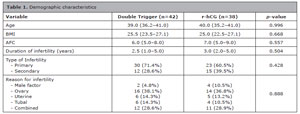
Table 1. Demographic characteristics
Data are presented as mean±standard deviation or median (interquartile range) according to distribution, and as n (%) for categorical variables.
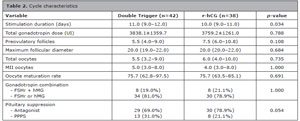
Table 2. Cycle characteristics
Continuous variables are presented as mean±standard deviation or median (interquartile range). Categorical variables are shown as n (%).
Stratified analyses (age and AFC)
By age, women ≤35 years showed a higher maturation rate with Double Trigger (median 88.9% vs. 75.7%; p=0.058) without differences in total or MII oocytes; outcomes were comparable in the 36-40 group (all p>0.10). In ≥41 years, Double Trigger yielded more MII oocytes (median 5.0 vs. 2.0; p=0.050) with similar maturation rates (75.0% vs. 66.7%; p=0.169; Fig. 1). By AFC, results were broadly similar across AFC <6 and AFC 6-15 strata; however, in AFC <6, there was a non-significant trend favoring Double Trigger for total oocytes, MII oocytes, and maturation rate (medians 4.0 vs. 3.0; 3.0 vs. 2.0; 80.0% vs. 66.7%, respectively; all p>0.18; Figure 1).
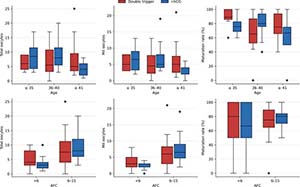
Figure 1. Outcomes of total oocytes, MII oocytes, and oocyte maturation rate according to trigger type (Double vs. r-hCG)Distribution of total oocytes, MII oocytes, and oocyte maturation rate across age groups (≤35, 36-40, and ≥41 years) and ovarian reserve categories based on antral follicle count (AFC <6 and 6-15). Results are compared between patients undergoing Double Trigger (red) and r-hCG (blue).
Correlation analysis in low reserve and advanced maternal age
In women aged ≥41 years, a weak positive correlation was observed between maximum follicular diameter and oocyte maturation rate, more apparent in the Double Trigger group (ρ=0.31; p=0.27), whereas the association was minimal with r-hCG (ρ=0.20; p=0.51). In the AFC <6 subgroup, the correlation was weakly negative, more pronounced with Double Trigger (ρ=-0.26; p=0.31) and nearly null with r-hCG (ρ=0.08; p=0.80). Visually, these trends are mirrored in the scatter plots, where the Double Trigger curves exhibit steeper slopes and wider dispersion compared with r-hCG (Figure 2).
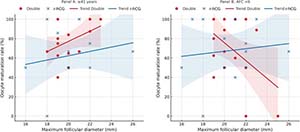
Figure 2. Correlation between maximum follicular diameter and oocyte maturation rate in patient subgroupsScatterplot showing the correlation between maximum follicular diameter (mm) and oocyte maturation rate (%) according to trigger type (Double: GnRH-agonist+β-hCG vs. r-hCG alone). Panel A: patients aged ≥41 years (double trigger n=15, r-hCG n=13). Panel B: patients with antral follicle count (AFC) <6 (double trigger n=17, r-hCG n=13). Trend lines and 95% confidence bands are shown.
Embryology outcomes in poor-prognosis subgroups
In women with low ovarian reserve (AFC <6), unadjusted descriptive analyses showed higher median day-5 embryo counts and greater dispersion in the modified double trigger group compared with r-hCG alone, along with a trend toward higher blastulation rates, while fertilization and cleavage rates were similar between groups (Table 3). Given the skewed distribution of embryological outcomes, these comparisons are presented descriptively. In adjusted analyses, trigger type was not independently associated with oocyte maturation rate, number of MII oocytes, or day-5 embryos in this subgroup (Table 4; Figure 3).
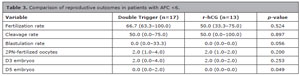
Table 3. Comparison of reproductive outcomes in patients with AFC <6.
Values are expressed as median (interquartile range). Fertilized 2PN oocytes, fertilization, cleavage, and blastulation rates, as well as the number of embryos on day 3 (D3) and day 5 (D5) were compared between the Double trigger and r-hCG groups. p-values are from Mann-Whitney U tests and are reported for descriptive/exploratory purposes due to skewed distributions and small subgroup sizes. A p<0.05 was considered significant.
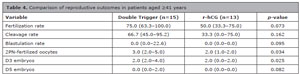
Table 4. Comparison of reproductive outcomes in patients aged ≥41 years
Values are expressed as median (interquartile range). Fertilized 2PN oocytes, fertilization, cleavage, and blastulation rates, as well as the number of embryos on day 3 (D3) and day 5 (D5) were compared between the Double trigger and r-hCG groups. p-values are from Mann-Whitney U tests and are reported for descriptive/exploratory purposes due to skewed distributions and small subgroup sizes. A p<0.05 was considered significant.
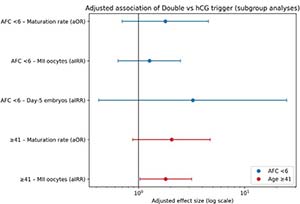
Figure 3. Adjusted association between trigger type and reproductive outcomes in poor-prognosis subgroupsForest plot showing adjusted effect estimates for the association between trigger type (modified double trigger vs. hCG alone) and reproductive outcomes in poor-prognosis subgroups. Points represent adjusted odds ratios (aOR) for oocyte maturation rate and adjusted incidence rate ratios (aIRR) for count outcomes, with horizontal lines indicating 95% confidence intervals. Models were adjusted for age, antral follicle count, body mass index, pituitary suppression protocol (antagonist vs. PPPS), total gonadotropin dose, and gonadotropin combination (FSHr + hMG vs FSHr or hMG). Blue markers represent patients with low ovarian reserve (AFC <6), and red markers represent women aged ≥41 years. The vertical line indicates no effect (effect estimate=1).
In women aged ≥41 years, unadjusted analyses demonstrated higher median numbers of 2PN-fertilized oocytes and day-3 embryos in cycles using the modified double trigger, with additional non-significant trends toward higher fertilization, cleavage, blastulation, and day-5 embryo development (Table 4). In binary analyses, achievement of ≥2 day-5 embryos occurred more frequently with the modified double trigger compared with r-hCG alone (33.3% vs. 0%; Fisher’s exact p=0.044; Figure 4).
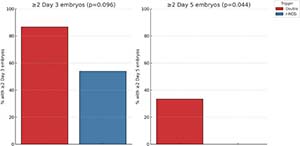
Figure 4. Proportion of patients ≥41 years with ≥2 embryos on day 3 and day 5 according to trigger typePercentages of women achieving ≥2 embryos on day 3 (panel A) and ≥2 embryos on day 5 (panel B) are shown for the ≥41 years subgroup, comparing Double trigger versus r-hCG. The proportion of cycles achieving ≥2 day-3 embryos was higher with the modified double trigger (13/15 cycles, 86.7%) compared with r-hCG alone (7/13 cycles, 53.8%). Achievement of ≥2 day-5 embryos occurred in 5/15 cycles (33.3%) with the modified double trigger and in 0/13 cycles (0%) with r-hCG alone. Comparisons were performed using Fisher’s exact test.
In adjusted models, among women aged ≥41 years, the modified double trigger was independently associated with a higher number of MII oocytes, while no statistically significant association was observed for oocyte maturation rate. Adjusted count models for day-5 embryos showed directionally consistent effects favoring the modified double trigger but with wide confidence intervals, reflecting sparse data and a high proportion of zero outcomes (Table 5).
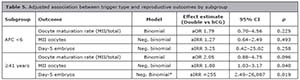
Table 5. Adjusted association between trigger type and reproductive outcomes by subgroup
Values are presented as adjusted effect estimates comparing the modified double trigger versus r-hCG alone. Oocyte maturation rate (MII/total oocytes) was analyzed using binomial logistic regression and is reported as adjusted odds ratios (aOR). Count outcomes (number of MII oocytes and day-5 embryos) were analyzed using negative binomial regression and are reported as adjusted incidence rate ratios (aIRR). All models were adjusted for age, antral follicle count, body mass index, pituitary suppression protocol (antagonist vs PPPS), total gonadotropin dose, and gonadotropin combination (FSHr + hMG vs. FSHr or hMG). Subgroup analyses were exploratory.
*Estimates for day-5 embryos in women aged ≥41 years are imprecise due to sparse data and a high proportion of zero counts and should be interpreted with caution.
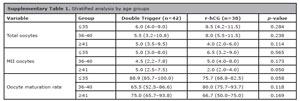
Supplementary Table 1. Stratified analysis by age groups
Comparison of total oocytes, MII oocytes, and oocyte maturation rate between Double vs. r-hCG in the ≤35, 36-40, and ≥41 age groups.
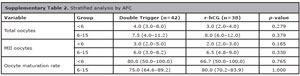
Supplementary Table 2. Stratified analysis by AFC
Comparison of total oocytes, MII oocytes, and oocyte maturation rate between Double vs. r-hCG in the AFC <6 and 6-15 groups.
DISCUSSION
In this retrospective cohort comparing a modified double trigger (r-hCG at -36 h plus GnRH-agonist at -34 h) versus r-hCG alone, although overall oocyte maturation rates were comparable between trigger strategies, exploratory subgroup analyses suggested differences favoring the modified double trigger in selected poor-prognosis populations. In women with low antral follicle count (AFC <6), unadjusted analyses showed higher day-5 embryo yield with the modified double trigger; however, these differences were not confirmed in adjusted models. In contrast, among women aged ≥41 years, the modified double trigger was associated with higher numbers of 2PN-fertilized oocytes and day-3 embryos, as well as a greater proportion of cycles achieving ≥2 day-5 embryos. Importantly, in adjusted analyses accounting for relevant clinical and stimulation-related factors, trigger type remained independently associated with a higher number of MII oocytes in this subgroup. Taken together, these findings indicate that while population-level differences in oocyte maturation may be modest, total MII oocytes and embryological benefits of a double-trigger strategy may be more consistently observed in women of advanced maternal age, with findings in low-reserve patients remaining hypothesis-generating.
The literature on double trigger is heterogeneous, but several studies report improved clinical outcomes versus r-hCG alone. In previous studies which applied the GnRH-agonist at -40 plus h β-hCG at -34 h, double trigger yielded higher number of oocytes retrieved (7.0±4.6 vs. 2.3±2.5, p<0.02), number of 2PN (6.0±4.6 vs. 1.7±1.2, p<0.002) and number of embryos transferred (2.2±0.7 vs. 0.85±0.9, p<0.002) (Haas et al., 2014); Similarly, other study had a significantly higher number of TQE (1.1±0.9 vs. 0.3±0.8, p<0.02), compared to r-hCG alone (Haas et al., 2019). Tu et al. (2024) achieved higher rates of 2PN cleavage embryos (3.54±3.37 vs. 2.11±2.15, p=0.025), top quality embryos (2.23±2.05 vs. 0.89±0.99, p<0.001), cumulative clinical pregnancy (20.00% vs. 2.86%, p=0.031), cumulative persistent pregnancy (14.29% vs. 0%, p<0.001), and cumulative live birth (14.29% vs. 0%, p<0.001) per stimulation cycle with double trigger compared with the r-hCG trigger control cycles, despite not having significant differences in number of oocytes retrieved, MII oocytes and maturation rate (Tu et al., 2024).
The evidence on dual trigger also reports improved outcomes in specific groups. A recent retrospective study that studied 449 infertile patients ≥35 years old receiving trigger at 34-36 h prior to oocyte retrieval, found that compared to the r-hCG (6,000-10,000 UI intramuscular injection) group, the dual-trigger group (6,000-10,000 IU of hCG + 0.2 mg of triptorelin) exhibited a statistically significant increase in retrieved oocytes (7.16 vs. 8.61, p=0.018), 2PN fertilizations (4.32 vs. 5.14, p=0.046), and cleavage stage embryos (1.97 vs. 2.35, p=0.032), even though no substantial difference was observed in the quantity of blastocysts acquired between the two groups (0.57 vs. 0.62, p=0.689). Overall analysis revealed that the hCG trigger group had significantly lower total implantation rate (27.91% vs. 43.10%, p<0.001), clinical pregnancy per patient (27.97% vs. 41.31%, p=0.003), and live birth per patient (19.92% vs. 33.80%, p=0.001) (Wang et al., 2025). Maged et al. (2021) compared 160 patients with diminished ovarian reserve according to Bologna criteria receiving either single r-hCG dose (10,000 UI) vs. dual (10,000 IU of hCG + 0.2 mg of triptorelin), and significantly higher numbers of retrieved oocytes (5.3±1.9 vs. 4.5±2.4, p=0.014), mature oocytes (3.8±1.4 vs. 3.1±1.7, p=0.004), total embryos (2.7±1.1 vs. 1.9±1.2, p=0.001), and good-quality embryos (2.3±1.0 vs. 1.1±0.2, p=0.021) in the dual trigger group; moreover, pregnancy rate per ovarian stimulation cycle was higher in this group (22.5% vs. 8.8%, p=0.028).
Evidence comparing dual/double triggering with r-hCG alone generally suggests a clinical advantage in favor of dual/double, although between-group differences in oocyte yield or early embryologic parameters are not consistently observed. In keeping with this pattern, our cohort showed no significant difference in the overall oocyte maturation rate; however, improvements emerged in downstream embryo metrics precisely where clinical need is greatest-among women with diminished ovarian reserve and those ≥41 years. These findings support a targeted rather than universal application of the double trigger, with the principal benefit expressed as enhanced embryo development rather than increased MII yield.
These results may be explained by an improvement in quality rather than quantity. Mechanistically, r-hCG engages LH receptors and provides a sustained luteotropic signal; GnRH-agonist elicits endogenous LH and FSH surges, more closely mimicking natural physiology. The FSH mini-surge facilitates cumulus expansion, gap-junction remodeling, hyaluronic acid matrix synthesis, and oocyte cytoplasmic maturation, processes that can improve competence even when total MII yield appears similar (Castillo et al., 2014; Riobó et al., 2025). “Double trigger” protocols typically administer GnRH-a at ~40 h and hCG at ~34-36 h before retrieval; other schemes use simultaneous “dual” triggering at ~34-36 h (Orvieto, 2025). Our center used a modified clearly defined sequence (hCG -36 h, GnRH-a -34 h), shifting the endogenous LH/FSH surge closer to retrieval. Even small timing adjustments can alter maturation windows; by positioning the endogenous surge ~30-32 h before retrieval (vs. ~36-40 h in the double 40/34 approach or ~32-34 h with dual 36/36) this protocol may reduce the risk of premature luteinization or ovulation in poor-prognosis cohorts, while rescuing intermediate-sized (≈17-20 mm) (Orvieto, 2025).
The observation that AFC <6 patients had more blastocysts (and a trend to higher blastulation) with double trigger suggests that embryo development, not just MII yield, may be the key benefit in low-reserve settings-consistent with hypotheses that the FSH surge enhances oocyte competence in cohorts with fragile folliculogenesis (Alyasin et al., 2016). In women ≥41 years, mainly higher numbers of MII oocytes, as well as higher numbers of 2PN-fertilized oocytes and day-3 embryos in unadjusted analyses, and a greater proportion achieving ≥2 day-5 embryos, are clinically relevant because they increase the probability of reaching transfer-worthy blastocysts-a challenge in advanced age. As it is known, advanced maternal age is associated with a decline in both ovarian reserve and oocyte competence. At present, no remedies are available to counteract the aging-related fertility decay; however, different therapeutic approaches can be offered to these patients (Ubaldi et al., 2019). An individualized ovulation trigger is one of the key tools available that should be individualized in ART treatments, as it may be beneficial in age related infertility being able to shift oocyte and embryo outcomes (Haahr et al., 2018).
Another important analysis was the correlation between maximum follicular diameter and oocyte maturation rate. It is worth noting that in several cases, ovulation triggering was performed when the leading follicles had reached ≥23 mm in diameter, not due to delayed timing but as a clinical decision aimed at favoring maturation of the intermediate cohort (14-16 mm) while allowing the largest follicles to “go”. This approach indirectly reflects a degree of follicular asynchrony, commonly observed in women with diminished reserve or advanced age, where heterogeneity in follicular growth requires prioritizing the mid-range follicles to optimize overall oocyte yield.
The divergent pattern-positive trend in women ≥41 years and negative/attenuated trend in AFC<6-may be explained not only by hormonal differences in response to the trigger type, but rather by the balance between follicular size and cohort quantity, which dictates whether the dual hormonal peak acts as a synchronizing or desynchronizing signal in the final stages of oocyte maturation. Although both groups showed patients with maximum follicular diameters ≥20 mm, which could indicate some degree of follicular asynchrony, the physiological implications differ. In women aged ≥41 years, the presence of larger dominant follicles probably coexisted with enough intermediate follicles still capable of maturing, allowing the double trigger (GnRH-agonist + β-hCG) to exert a positive effect on overall oocyte maturation. In contrast, in low-reserve patients (AFC <6), similar follicular diameters likely reflect a dispersed and depleted cohort, where leading follicles may already have reached post-maturity, while smaller ones failed to complete maturation-thus explaining the negative trend observed in this group.
This increased variation in follicles size have been suggested to exhibit different granulosa cell related processes, so the existence of follicular disparity such as maximum follicle diameter ≥20 mm on trigger day might have negative consequences for IVF outcome (Knopman et al., 2012; Costermans et al., 2019). Physiologically, the dual/double stimulus induces concurrent LH and FSH surges, which can synchronize maturation when a minimum functional follicular mass is present but may be less effective-or even desynchronizing-when the cohort is too small or heterogeneous. The absence of correlation in the r-hCG group supports the notion that a single LH stimulus, without the compensatory FSH rise, fails to modulate intraovarian synchrony or improve global maturation outcomes.
For routine IVF-ICSI populations, our data do not support a universal superiority of double trigger on maturation rates. However, in poor-prognosis patients (especially ≥41 years), our findings suggest mainly oocyte and possible embryological advantages that may increase the odds of having transferable blastocysts, not forgetting that its positive impact might be context-dependent being affected by factors such as follicular cohort synchrony. This aligns with evidence in antagonist cycles and select cohorts where dual/double triggers improved embryo quality and pregnancy metrics as previously mentioned. In addition, the use of progestin-primed pituitary suppression (PPPS) cycles in poor ovarian responders have been previously proven to be comparable to the GnRH-ant protocol regarding induction parameters and cycle cancelation, biochemical pregnancy, clinical pregnancy, and abortion rates (Haahr et al., 2018; Zhu et al., 2021; Zhou et al., 2023).
Strengths of this study include a single laboratory setting with consistent stimulation/embryology protocols, uniform ICSI, and a priori subgroup definitions (age and AFC) with additional binary endpoints that are clinically interpretable. Limitations include the retrospective design, sample size limiting power in sub-analyses, and the absence of implantation/clinical pregnancy/live-birth endpoints. The literature itself is mixed: while some meta-analyses and cohorts show pregnancy/LBR gains, others-particularly in DOR-show oocyte increases without clear LBR improvement, underscoring the need for prospective randomized evaluation with live birth as primary outcome and standardized timing protocols (Ding et al., 2017; Zhang et al., 2021; González et al., 2023).
CONCLUSIONS
In this study, the modified double-trigger protocol did not improve overall oocyte maturation at the population level. Exploratory analyses suggested differences in downstream embryological outcomes in poor-prognosis subgroups, with more consistent findings observed in women of advanced maternal age. In this subgroup, adjusted analyses supported an independent association between the modified double trigger and a higher number of MII oocytes, whereas findings in women with low antral follicle count remained hypothesis-generating. Taken together, these results suggest that the potential benefit of dual or double trigger strategies may depend on patient-specific characteristics rather than representing a universal advantage over r-hCG alone. Further investigation into follicular synchrony and other biological determinants is warranted to better define which patients may benefit from combined triggering approaches. Future prospective and randomized controlled trials should evaluate precisely timed trigger schemes, rather than broad timing windows, to clarify the populations most likely to benefit from specific trigger strategies.
REFERENCES
Abbara A, Clarke SA, Dhillo WS. Novel concepts for inducing final oocyte maturation in in vitro fertilization treatment. Endocr Rev. 2018;39:593-628. PMID: 29982525 DOI: 10.1210/er.2017-00236
Medline
Alyasin A, Mehdinejadiani S, Ghasemi M. GnRH agonist trigger versus hCG trigger in GnRH antagonist in IVF/ICSI cycles: A review article. Int J Reprod Biomed. 2016;14:557-66. PMID: 27738657
Medline
Beebeejaun Y, Copeland T, Duffy JMN, Sarris I, Showell M, Wang R, Sunkara SK. Triggering oocyte maturation in in vitro fertilization treatment in healthy responders: a systematic review and network meta-analysis. Fertil Steril. 2025;123:812-26. PMID: 39547644 DOI: 10.1016/j.fertnstert.2024.11.011
Medline
Castillo JC, Humaidan P, Bernabéu R. Pharmaceutical options for triggering of final oocyte maturation in ART. Biomed Res Int. 2014;2014:580171. PMID: 25133168 DOI: 10.1155/2014/580171
Medline
Costermans NGJ, Keijer J, Van Schothorst EM, Kemp B, Keshtkar S, Bunschoten A, Soede NM, Teerds KJ. In ovaries with high or low variation in follicle size, granulosa cells of antral follicles exhibit distinct size-related processes. Mol Hum Reprod. 2019;25:614-24. PMID: 31323669 DOI: 10.1093/molehr/gaz042
Medline
Ding N, Liu X, Jian Q, Liang Z, Wang F. Dual trigger of final oocyte maturation with a combination of GnRH agonist and hCG versus a hCG alone trigger in GnRH antagonist cycle for in vitro fertilization: A systematic review and meta-analysis. Eur J Obstet Gynecol Reprod Biol. 2017;218:92-8. PMID: 28957685 DOI: 10.1016/j.ejogrb.2017.09.004
Medline
González VG, Triana AM, García IS, Nieto SO, Urrutia MC, García IC, Gastañaga-Holguera T. Dual trigger vs. Conventional trigger outcomes in In Vitro Fertilization. Systematic review and meta-analysis. JBRA Assist Reprod. 2023;27:112-9. PMID: 36356171 DOI: 10.5935/1518-0557.20220035
Medline
Haahr T, Esteves SC, Humaidan P. Individualized controlled ovarian stimulation in expected poor-responders: an update. Reprod Biol Endocrinol. 2018;16:20. PMID: 29523204 DOI: 10.1186/s12958-018-0342-1
Medline
Haas J, Zilberberg E, Dar S, Kedem A, Machtinger R, Orvieto R Co-administration of GnRH-agonist and hCG for final oocyte maturation (double trigger) in patients with low number of oocytes retrieved per number of preovulatory follicles--a preliminary report. J Ovarian Res. 2014;7:77. PMID: 25296696 DOI: 10.1186/1757-2215-7-77
Medline
Haas J, Zilberberg E, Nahum R, Mor Sason A, Hourvitz A, Gat I, Orvieto R. Does double trigger (GnRH-agonist + hCG) improve outcome in poor responders undergoing IVF-ET cycle? A pilot study. Gynecol Endocrinol. 2019;35:628-30. PMID: 30810400 DOI: 10.1080/09513590.2019.1576621
Medline
Maged AM, Ragab MA, Shohayeb A, Saber W, Ekladious S, Hussein EA, El-Mazny A, Hany A. Comparative study between single versus dual trigger for poor responders in GnRH-antagonist ICSI cycles: a randomized controlled study. Int J Gynaecol Obstet. 2021;152:395-400. PMID: 33011968 DOI: 10.1002/ijgo.13405
Medline
Matsumoto L, Yamakami LYS, Lo Turco EG, Benetti-Pinto CL, Yela DA. Use of triggers on in vitro fertilization and evaluation of risk factors for sub-optimal maturation rate. Rev Bras Ginecol Obstet. 2022;44:369-75. PMID: 35108732 DOI: 10.1055/s-0041-1741455
Medline
Orvieto R. Triggering final follicular maturation for IVF cycles. Reprod Biol Endocrinol. 2025;23:12. PMID: 39844247 DOI: 10.1186/s12958-024-01332-5 Erratum in: Reprod Biol Endocrinol. 2025;23:26. PMID: 39844247 DOI: 10.1186/s12958-025-01363-6
Medline
Riobó A, Martínez Acosta A, Martinez-Rocca L, Taboas E, López de Uralde B, Fernandez I, Garrido N, Muñoz E. Dual triggering for final oocyte maturation: a narrative review. Front Endocrinol (Lausanne). 2025;16:1556732. PMID: 40475991 DOI: 10.3389/fendo.2025.1556732
Medline
Tu B, Zhang H, Chen L, Yang R, Liu P, Li R, Qiao J. Co-administration of GnRH-agonist and hCG (double trigger) for final oocyte maturation increases the number of top-quality embryos in patients undergoing IVF/ICSI cycles. J Ovarian Res. 2024;17:137. PMID: 38961417 DOI: 10.1186/s13048-024-01465-6
Medline
Ubaldi FM, Cimadomo D, Vaiarelli A, Fabozzi G, Venturella R, Maggiulli R, Mazzilli R, Ferrero S, Palagiano A, Rienzi L. Advanced maternal age in IVF: still a challenge? The present and the future of its treatment. Front Endocrinol (Lausanne). 2019;10:94. PMID: 30842755 DOI: 10.3389/fendo.2019.00094
Medline
Wang T, Ren J, Qi Z, Li X, Xiang S, Zhao S, Yu Y, Lian F, Zhao Y. The impact of hCG trigger versus dual trigger on reproductive outcomes in elderly infertile women: a retrospective cohort study. Front Endocrinol (Lausanne). 2025;16:1580610. PMID: 40502399 DOI: 10.3389/fendo.2025
Medline
Working Group on the update of the ESHRE/ALPHA Istanbul Consensus; Coticchio G, Ahlström A, Arroyo G, Balaban B, Campbell A, De Los Santos MJ, Ebner T, Gardner DK, Kovačič B, Lundin K, Magli MC, Mcheik S, Morbeck DE, Rienzi L, Sfontouris I, Vermeulen N, Alikani M. The Istanbul Consensus update: a revised ESHRE/ALPHA consensus on oocyte and embryo static and dynamic morphological assessment† ‡. Reprod Biomed Online. 2025;50:104955. PMID: 40300986 DOI: 10.1016/j.rbmo.2025.104955
Medline
Zhang Y, Guo X, Guo L, Chang HM, Shu J, Leung PCK. Outcomes comparison of IVF/ICSI among different trigger methods for final oocyte maturation: a systematic review and meta-analysis. FASEB J. 2021;35:e21696. PMID: 34085322 DOI: 10.1096/fj.202100406R
Medline
Zhou R, Dong M, Huang L, Wang S, Fan L, Liang X, Zhang X, Liu F. Comparison of cumulative live birth rates between progestin-primed ovarian stimulation protocol and gonadotropin-releasing hormone antagonist protocol in different populations. Front Endocrinol (Lausanne). 2023;14:1117513. PMID: 37143731 DOI: 10.3389/fendo.2023.1117513
Medline
Zhu H, Zhao C, Pan Y, Zhou H, Jin X, Xu W, Zhang S. Dual Trigger for Final Follicular Maturation Improves Cumulative Live-Birth Rate in Ovarian Stimulation for Freeze-All In Vitro Fertilization/Intracytoplasmic Sperm Injection Cycles. Front Endocrinol (Lausanne). 2021;12:708247. PMID: 34349729 DOI: 10.3389/fendo.2021.708247
Medline