JBRA Assist. Reprod. 2023;27(2):215-221
ORIGINAL ARTICLE
doi: 10.5935/1518-0557.20220022
Ovarian stimulation with luteinizing hormone supplementation: the impact of timing on ovarian response and ICSI outcomes
1Instituto Sapientiae - Centro de Estudos e Pesquisa em Reprodução Humana Assistida
2Fertility Medical Group
Conflict of interest
All the authors declare that there is no conflict of interest.
ABSTRACT
Objective: To investigate whether the timing of rLH addition to rFSH during controlled ovarian stimulation (COS) impacts ovarian response and the outcomes of intracytoplasmic sperm injection (ICSI) cycles.
Methods: Data of 1278 patients undergoing ICSI between 2015 and 2018, in a private university-affiliated IVF center were analyzed. Patients were divided into groups according to the timing of LH addition to the COS protocol: Group LH-start (n=323), in which LH was administered since day 1 of ovarian stimulation; and Group LH-mid (n=955), in which LH was administered concomitantly with gonadotropin releasing hormone (GnRH) antagonist. Data were also stratified according to female age and response to COS. The outcomes of COS and ICSI were compared between the groups.
Results: For the general group and in patients aged ≥ 35 years, higher blastocyst development rates were in Group LH-mid compared to Group LH-start. In patients with poor response to COS (POR), higher fertilization rate, blastocyst development rate and implantation rate were observed in Group LH-mid.
Conclusions: rLH supplementation in POR patients may improve laboratorial and clinical outcomes when started in the mid-follicular phase, in GnRH antagonist ICSI cycles.
Keywords: Follicle-stimulating hormone, ICSI, implantation, luteinizing hormone, ovarian stimulation.
Introduction
Recombinant follicle-stimulating hormone (rFSH) and luteinizing hormone (rLH), individually or in combination, are the most routinely used gonadotropins for controlled ovarian stimulation (COS) in assisted reproductive technology (ART). Despite their divergent roles, these hormones complement each other during follicle regulation, from recruitment to oocyte ovulation (Raju et al., 2013).
One particular onus of the ovarian stimulation is the diminution in releases of endogenous FSH and LH (Mochtar et al., 2007), via pituitary blockage with GnRH antagonists. Despite, stimulation with exogenous FSH generally supports follicular development, more than 10% of patients undergoing ART do not respond to FSH stimulation, probably due to lack of LH (Hill et al., 2012a). For these patients, there is a strong body of evidence showing that LH supplementation is beneficial (Humaidan et al., 2004; Alviggi et al., 2011; 2012; Bosch et al., 2011; Matorras et al., 2011; Wong et al., 2011; Hill et al., 2012a; 2012b).
Initially, rLH was commercialized to supplement FSH administration in patients with hypogonadotropic hypogonadism. Later, novel drugs were developed in a fixed combination of 2:1 (150 IU of rFSH and 75 IU of rLH) for the purpose of stimulating follicular development. Then, the use of LH supplementation was recommended to patients with previous poor response (POR) to COS, inadequate ovarian response in the current treatment, and those aged ≥35 years (Wong et al., 2011). A meta-analysis of 36 randomized controlled trials and 8125 women undergoing ART investigating the effectiveness of rLH addition to rFSH for COS compared to rFSH alone showed that the use of rLH combined with rFSH may lead to more ongoing pregnancies than rFSH alone (Mochtar et al., 2017).
To the best of our knowledge, there is limited evidence that the timing of rLH addition to rFSH during COS may impact the ovarian response or the outcomes of ICSI. Only one study, with a limited casuistic, demonstrated improved ovarian response, embryo quality and pregnancy rate with LH supplementation from GnRH antagonist administration day, in estimated POR patients. On the other hand, improved endometrial thickness was observed by administering LH from the start of FSH administration (Gizzo et al., 2015). The objective of the present study was to further investigate this hypothesis in a larger population, and in subpopulations of patients stratified by age and response to COS.
Materials and Methods
Experimental design, patients, and inclusion and exclusion criteria
This historical cohort study included data obtained via chart review of 1278 ICSI cycles performed in 1278 patients between 2015 and 2018, in a private university-affiliated IVF center. In the first analysis, patients were divided into two groups according to the timing of LH addition to the COS protocol: Group LH-start (n=323), in which LH was administered since day 1 of ovarian stimulation; and Group LH-mid (n=955), in which LH was administered from the sixth day of stimulus on. Then, data were stratified according to female age (< 35 years-old, n=283, and ≥ 35 years-old, n=995) and response to COS (POR: ≤ 4 retrieved oocytes, n= 423, and normal response: > 5 retrieved oocytes, n= 855). The response to COS and ICSI outcomes were compared among the groups.The inclusion criteria were as follows: couples with primary infertility undergoing their first or second ICSI cycle, which had fresh embryo transfer on day 5 of embryo development.The exclusion criteria were as follows: Female patients undergoing ICSI cycles with vitrified/thawed or donated oocytes, surgical sperm retrieval, cryopreserved sperm, and vitrified/thawed embryo transfer.Ovarian response to COS and ICSI outcomes were compared between the groups.All patients signed a written informed consent form. The study was approved by the local Institutional Review Board.
Controlled ovarian stimulation
For patients in the LH-start group, ovarian stimulation was started on day 3 of cycle with a fixed ratio combination of rFSH 300 IU and rLH 150 IU (Pergoveris®, Merck Serono S.p.A, Bari, Italy) until the day of hCG trigger.For patients in the LH-mid group, ovarian stimulation was also started on day 3 of cycle, but with administration of rFSH 300 IU monotherapy (Gonal-f, Serono, Geneva, Switzerland) for five days. The gonadotropin dose was adjusted with the introduction of rLH (Pergoveris), which was started concomitantly with GnRH antagonist, and maintained until the day of hCG trigger.The following steps were the same for both groups. When at least two follicles ≥14 mm were visualized, pituitary blockage was performed using gonadotropin-releasing hormone (GnRH) antagonist (Cetrotide®; Merck KGaA, Darmstadt, Germany). When three or more follicles attained a mean diameter of ≥ 17mm and adequate serum estradiol levels were observed, final follicular maturation was triggered by the administration of r-hCG (250 µg, Ovidrel®, Merck KGaA, Geneva, Switzerland) or GnRH agonist (triptorelin 0.2 mg, Gonapeptyl; Ferring GmbH, Kiel, Germany or leuprolide acetate 2.0mg, Lupron Kit™, Abbott S.A Societé Française des Laboratoires, Paris, France). Oocyte retrieval was performed 35 hours later.
Oocyte preparation
Retrieved oocytes were cultivated in culture media drops (Global for fertilization, LifeGlobal, Guilford, USA) covered with paraffin oil (Paraffin oil P.G., LifeGlobal) for 4 h before cumulus cell denudation. The surrounding cumulus cells were removed enzymatically by exposure to a HEPES-buffered medium containing hyaluronidase (80 IU/ml, LifeGlobal), and then mechanically by gently pipetting with a hand-drawn Pasteur pipette (Humagen Fertility Diagnostics, Charlottesville, USA). Oocytes were incubated for 1h before ICSI.Oocyte maturity was assessed using an inverted Nikon Diaphot microscope with a Hoffmann modulation contrast system under 400x magnification (Eclipse TE 300 microscope, Nikon, Tokyo, Japan), just before sperm injection (4 hours after retrieval). Oocytes that had released the first polar body (MII stage) were used for ICSI.
Intracytoplasmic sperm injection
Intracytoplasmic sperm injection was performed according to Palermo et al. (1992). Sperm selection was analyzed at 400x magnification using an inverted Nikon Eclipse TE 300 microscope. The injection was performed in a micro-injection dish prepared with buffered medium (Global w/HEPES, LifeGlobal, Guilford, USA) covered with paraffin oil, on an inverted microscope heated stage (37.0°C ± 0.5°C). Fertilization was confirmed by the presence of two pronuclei (PN) and the extrusion of the second polar body 16 - 18h post-ICSI. Embryos were cultured in 50-µL drops of culture medium (Global®, LifeGlobal, Guilford, USA) covered with paraffin oil, in a humidified atmosphere under 6% CO2, at 37°C, for five days.
Embryo quality and embryo transfer
Embryos were morphologically evaluated on days three and five of development using an inverted Nikon Diaphot microscope with a Hoffmann modulation contrast system (Eclipse TE 300 microscope, Nikon, Tokyo, Japan) under 400x magnification.The blastocyst development rate was defined as the number of embryos that reached blastocyst stage at day five by the number of fertilized oocytes in each cycle. On day 5, one to two embryos were transferred per patient, depending on maternal age and embryo quality, using a soft catheter with transabdominal ultrasound guidance.
Clinical follow-up
A serum pregnancy test was performed 10 days after embryo transfer. Women with a positive βhCG test underwent a transvaginal ultrasound scan after two weeks. Clinical pregnancy was confirmed when at least one intrauterine gestational sac with fetal heartbeat was detected. Implantation rate was calculated as the number of gestational sacs divided by the number of embryos transferred. Clinical pregnancy rates were calculated per embryo transfer. Miscarriage was defined as pregnancy loss before 20 weeks gestation.
Data analysis and statistics
Post hoc power analysis was calculated, given α of 5%, sample size of 1278, and effect size for implantation rate. The achieved power was superior to 99%. The calculation was performed using G*Power 3.1.7.In the first analysis, demographics (female and male ages, and female BMI), response to COS (FSH dose, estradiol level on trigger day, number of follicles and retrieved oocytes, oocyte yield, and MII oocyte rates), and the outcomes of ICSI (fertilization rate, blastocyst development rate, cycles with embryo transfer rate, implantation rate, pregnancy rate and miscarriage rate) were compared between the groups using generalized linear models followed by Bonferroni post hoc test. Then, data were stratified according to female age and response to COS and were re-analyzed as above-mentioned.Data are expressed as mean ± standard error for continuous variables or percentages for dichotomous variables, and p-values. p-value was significant at 5% level (<0.05). The analysis was performed using SPSS Statistics 21 (IBM, New York, New York, USA).
Results
For the general group, higher blastocyst development rate was observed in Group LH-mid compared to Group LH-start (40.8 ± 32.6 vs. 33.0 ± 31.9, p=0.012) (Table 1).
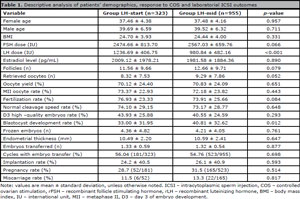
Table 1. Descriptive analysis of patients’ demographics, response to COS and laboratorial ICSI outcomes
In patients aged < 35 years, no significant differences were observed between the groups (Table 2).
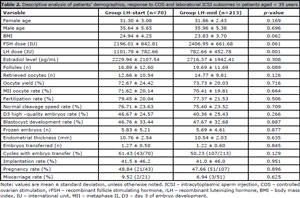
Table 2. Descriptive analysis of patients’ demographics, response to COS and laboratorial ICSI outcomes in patients aged < 35 years
In patients aged ≥ 35 years, higher blastocyst development rate was observed in Group LH-mid compared to Group LH-start (38.5 ± 32.3 vs. 28.8 ± 30.4, p=0.006) (Table 3).
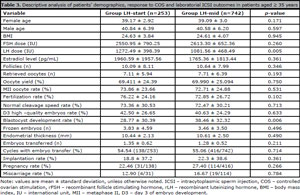
Table 3. Descriptive analysis of patients’ demographics, response to COS and laboratorial ICSI outcomes in patients aged ≥ 35 years
In patients with low response to COS (< 5 retrieved oocytes), there were significant differences between the LH-start and the LH-mid groups regarding the female age (38.4 ± 4.3 vs. 39.5 ± 3.8, p=0.011, respectively) and body mass index (24.1 ± 3.1 vs. 24.9 ± 4.5, p=0.033, respectively), therefore, the analysis was adjusted for these variables. Significantly higher fertilization rate (68.3 ± 2.5 vs. 78.6 ± 3.7, p=0.023), blastocyst development rate (22.5 ± 7.2 vs. 44.7 ± 6.2, p=0.022) and implantation rate (13.7 ± 37.0 vs. 18.2 ± 37.8, p<0.001) were observed in Group LH-mid (Table 4).
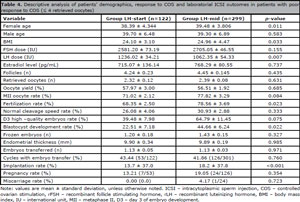
Table 4. Descriptive analysis of patients’ demographics, response to COS and laboratorial ICSI outcomes in patients with poor response to COS (≤ 4 retrieved oocytes)
In patients with normal response to COS (> 4 retrieved oocytes), no significant differences were observed between the groups (Table 5).
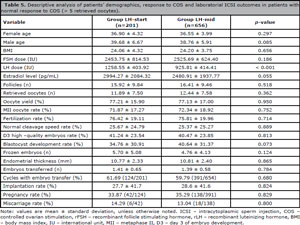
Table 5. Descriptive analysis of patients’ demographics, response to COS and laboratorial ICSI outcomes in patients with normal response to COS (> 5 retrieved oocytes).
Discussion
In this study, we aimed at investigating whether the timing of rLH addition to rFSH during COS impacts ovarian response and the outcomes of ICSI cycles in different female populations. We observed that patients with low response to COS benefited from the addition of LH in the mid-follicular phase, which resulted in improved fertilization, blastocyst development and implantation rates compared to those in which LH was started concomitantly with FSH administration.
Our findings are in line with a previous study that demonstrated the value of LH supplementation in the mid-follicular phase in POR patients (Gizzo et al., 2015), by rescuing the ongoing cycle through the compensation of an initial slow ovarian response (Alviggi et al., 2018). The use of LH supplementation creates a more physiological gonadotrophic surrounding and balances the severe deprivation of endogenous LH in GnRH antagonist cycles. Nonetheless, the excessive production of LH, derived from the concomitant administration of exogenous FSH and LH from the beginning of cycle, may cause follicle atresia by exceeding the window of LH concentration for the normal follicular function (Filicori et al., 2003; Palermo, 2007). In addition, growing follicles become progressively sensitive to and ultimately dependent on LH activity for their development, a fact that may justify its supplementation in the mid to late follicular phase (Shoham, 2002).
Even though we have failed to demonstrate significant differences between the LH timing groups in terms of number of retrieved oocytes and mature oocytes, we observed significant differences in the rates of fertilization and blastulation, which suggests that the oocytes were of higher quality, which in turn lead to a higher implantation rate in the Group LH-mid compared to Group LH-start. Despite patients treated with LH, regardless timing of start, possess reduced apoptotic cumulus cells (CC) (Ruvolo et al., 2007), those in which LH was administered later in the follicular phase showed higher concentrations of CC RNA expression and intra-follicular growth factors (Barberi et al., 2012). Another explanation for the improved implantation rate besides higher blastocyst implantation potential might be related to the influence of LH on the upregulation of endometrial LH receptors, thus enhancing endometrial receptivity (Tesarik et al., 2003).
Previous studies have showed the beneficial effects of LH supplementation in POR patients. Lehert et al. (2014) found significantly higher number of retrieved oocytes and an increase of 30% in clinical pregnancy rates in a meta-analysis that included 40 randomized controlled trials (RCTs). A recent study showed a half-fold change in the incidence of total pregnancy outcome failure (defined as a combination of biochemical pregnancy, early spontaneous miscarriage, late spontaneous miscarriage, and ectopic pregnancy) in LH-supplemented cycles compared to r-FSH monotherapy (Humaidan et al., 2017). It is important to highlight that the definition of POR may have biased the outcomes of the studies. For example, a systematic review of 47 RCTs studies found 41 different descriptions for POR and each definition was used by no more than three RCTs (Polyzos & Devroey, 2011). Nonetheless, another study showed that nearly 80% of the IVF clinics participating in a worldwide survey used ‘number of follicles produced’ to interpret POR (Patrizio et al., 2015).
The present study adds to general knowledge of POR management; however, it was not without limitations. The limitations included the retrospective design and limited sample size in subpopulations. In addition, the reduced clinical outcomes related to POR patients may hamper the true estimation of the differences between the stimulation groups in terms of pregnancy and miscarriage rates.
In conclusion, the findings of the present study are clinically relevant and, interpreted along with previous evidence, support the use of LH supplementation in POR patients, which may improve laboratorial and clinical outcomes when started in the mid-follicular phase, in GnRH antagonist ICSI cycles.
References
Alviggi C, Clarizia R, Mollo A, Ranieri A, De Placido G. Who needs LH in ovarian stimulation? Reprod Biomed Online. 2011;22:S33-41 PMID: 21575848 DOI: 10.1016/S1472-6483(11)60007-2 Medline
Alviggi C, Humaidan P, Ezcurra D. Hormonal, functional and genetic biomarkers in controlled ovarian stimulation: tools for matching patients and protocols. Reprod Biol Endocrinol. 2012;10:9. PMID: 22309877 DOI: 10.1186/1477-7827-10-9 Medline
Alviggi C, Conforti A, Esteves SC, Andersen CY, Bosch E, Bühler K, Ferraretti AP, De Placido G, Mollo A, Fischer R, Humaidan P. Recombinant luteinizing hormone supplementation in assisted reproductive technology: a systematic review. Fertil Steril. 2018;109:644-64. PMID: 29653717 DOI: 10.1016/j.fertnstert.2018.01.003 Medline
Barberi M, Ermini B, Morelli MB, Ermini M, Cecconi S, Canipari R. Follicular fluid hormonal profile and cumulus cell gene expression in controlled ovarian hyperstimulation with recombinant FSH: effects of recombinant LH administration. J Assist Reprod Genet. 2012;29:1381-91. PMID: 23188412 DOI: 10.1007/s10815-012-9893-9 Medline
Bosch E, Labarta E, Crespo J, Simón C, Remohí J, Pellicer A. Impact of luteinizing hormone administration on gonadotropin-releasing hormone antagonist cycles: an age-adjusted analysis. Fertil Steril. 2011;95:1031-6. PMID: 21067717 DOI: 10.1016/j.fertnstert.2010.10.021 Medline
Gizzo S, Andrisani A, Noventa M, Manfè S, Oliva A, Gangemi M, Nardelli GB, Ambrosini G. Recombinant LH supplementation during IVF cycles with a GnRH-antagonist in estimated poor responders: A cross-matched pilot investigation of the optimal daily dose and timing. Mol Med Rep. 2015;12:4219-29. PMID: 26059981 DOI: 10.3892/mmr.2015.3904 Medline
Humaidan P, Bungum M, Bungum L and Yding Andersen C. Effects of recombinant LH supplementation in women undergoing assisted reproduction with GnRH agonist down-regulation and stimulation with recombinant FSH: an opening study. Reprod Biomed Online. 2004;8:635-43. PMID: 15169576 DOI: 10.1016/S1472-6483(10)61643-4 Medline
Lehert P, Kolibianakis EM, Venetis CA, Schertz J, Saunders H, Arriagada P, Copt S and Tarlatzis B. Recombinant human follicle-stimulating hormone (r-hFSH) plus recombinant luteinizing hormone versus r-hFSH alone for ovarian stimulation during assisted reproductive technology: systematic review and meta-analysis. Reprod Biol Endocrinol. 2014;12:17. PMID: 24555766 DOI: 10.1186/1477-7827-12-17 Medline
Matorras R, Prieto B, Exposito A, Mendoza R, Crisol L, Herranz P and Burgués S. Mid-follicular LH supplementation in women aged 35-39 years undergoing ICSI cycles: a randomized controlled study. Reprod Biomed Online. 2011;22:S43-51. PMID: 21575849 DOI: 10.1016/S1472-6483(11)60008-4 Medline
Mochtar MH, Danhof NA, Ayeleke RO, Van der Veen F, van Wely M. Recombinant luteinizing hormone (rLH) and recombinant follicle stimulating hormone (rFSH) for ovarian stimulation in IVF/ICSI cycles. Cochrane Database Syst Rev. 2017;5:Cd005070. PMID: 28537052 DOI: 10.1002/14651858.CD005070.pub3 Medline
Palermo G, Joris H, Devroey P, Van Steirteghem AC. Pregnancies after intracytoplasmic injection of single spermatozoon into an oocyte. Lancet. 1992;340:17-8. PMID: 1351601 DOI: 10.1016/0140-6736(92)92425-F Medline
Palermo R. Differential actions of FSH and LH during folliculogenesis. Reprod Biomed Online. 2007;15:326-37. PMID: 17854533 DOI: 10.1016/S1472-6483(10)60347-1 Medline
Patrizio P, Vaiarelli A, Levi Setti PE, Tobler KJ, Shoham G, Leong M, Shoham Z. How to define, diagnose and treat poor responders? Responses from a worldwide survey of IVF clinics. Reprod Biomed Online. 2015;30:581-92. PMID: 25892496 DOI: 10.1016/j.rbmo.2015.03.002 Medline
Polyzos NP, Devroey P. A systematic review of randomized trials for the treatment of poor ovarian responders: is there any light at the end of the tunnel? Fertil Steril. 2011; 96: 1058-61.e7. PMID: 22036048 DOI: 10.1016/j.fertnstert.2011.09.048 Medline
Ruvolo G, Bosco L, Pane A, Morici G, Cittadini E and Roccheri MC. Lower apoptosis rate in human cumulus cells after administration of recombinant luteinizing hormone to women undergoing ovarian stimulation for in vitro fertilization procedures. Fertil Steril. 2007;87:542-6. PMID: 17126339 DOI: 10.1016/j.fertnstert.2006.06.059 Medline
Shoham Z. The clinical therapeutic window for luteinizing hormone in controlled ovarian stimulation. Fertil Steril. 2002;77:1170-7. PMID: 12057724 DOI: 10.1016/S0015-0282(02)03157-6 Medline
Tesarik J, Hazout A, Mendoza C. Luteinizing hormone affects uterine receptivity independently of ovarian function. Reprod Biomed Online. 2003;7:59-64. PMID: 12930575 DOI: 10.1016/S1472-6483(10)61729-4 Medline
Wong PC, Qiao J, Ho C, Ramaraju GA, Wiweko B, Takehara Y, Nadkarni PV, Cheng LC, Chen HF, Suwajanakorn S, Vuong TN. Current opinion on use of luteinizing hormone supplementation in assisted reproduction therapy: an Asian perspective. Reprod Biomed Online. 2011;23:81-90. PMID: 21550853 DOI: 10.1016/j.rbmo.2011.03.023 Medline